-
Obituary of Julia Obertreis
In silent mourning and with much grief we hereby must say goodbye to our valued network member and appreciated colleague
Julia Obertreis
who passed unexpectedly last week at the age of 54.
We give our condolences to the family, friends and colleagues and want to honour Julia’s character and her contributions within her family and friends, but also within the research network, which has lost a dear member and bright mind.
Many of our network members have been in close contact and exchange with Julia and her original ideas, and together as well as with others, Julia has contributed to the sphere of contemporary history about Eastern Europe and as an inspiring professor for many of her students at the FAU in Erlangen. As an editor of the Slavic Review and member of the Scientific Advisory Board she enriched the scientific field with her publications on Russian and multi-ethnic empires, infrastructure and environmental, global and Eastern European history and many more.
We are full of sorrow about the loss of this dear friend, colleague and mind and we are wishing Julia’s family, friends and colleagues courage and peace during this time of mourning.

For those wanting to send a short letter of condolence or a honouring of Julia’s participation and appreciation, we can publish them collectively and thus announce our support through a lasting “memory wall”.
-
Network Conference 2023: Forms of Ecological Knowledge
From the 14th to 16th of July 2023, the first public conference of our network will take place under the topic “Forms of Ecological Knowledge. DFG Network “Russian Ecospheres”. It will take place at the Ludwig Maximilian Universität in Munich.
Concept
Our network members will meet in a public conference lasting several days, in which they will present their results and progress in the various working groups and workshops.
The 2023 Russian Ecospheres Network Annual Meeting invites contributions on forms of ecological knowledge in Russia. It asks for textual, discursive, social and political modes of generating, ordering and organizing ecological knowledge. Drawing on the recent resurgence of thinking about form in theory and on historical understandings of form in the natural and social sciences as well as cultural studies, it looks for distinct Russian approaches to form and aims to locate them globally. It is interested in contributions to the conceptual history of ecological form in the Russian and Soviet empire as well as in empirical studies related to the subject.
Our conference in the context of current discourses
We assume that a dialogue about form across disciplines can help to establish a more nuanced notion of “ecological form” (Hensley, Steer). To open up the space for our disparate disciplinary approaches (literary and cultural studies, environmental history, history of science) and transdisciplinary dialogue, we chose an open, multi-angled concept of form. Such an understanding grasps forms as assemblages and configurations of ordering knowledge, characterized by recurrent and shifting patterns and materialized in distinct communicative and institutional forms of organization and genre.
Regarding anticipations of ecological form in Russian and Soviet theory, an ecocritical reassessment of Russian formalism could be a promising starting point to ask how processes of ecological and cultural transformation do influence each other:
Building on Levine’s formal theory of form, this conference asks how forms constrain, differ, overlap, intersect, travel and do political and epistemological work across time and space. In dialogue with case studies form various research contexts (linguistics, genre theory, realism, materialist aesthetics, semiotics of culture, cultural history, kulturologija, philosophy, ethics, theology, anthropology and ethnography, conceptual history, history of science, Umweltgeschichte [environmental history]), we ask for the “affordances of form” (Levine), taking into account the materiality of form, its appropriation by actors in the field and its variation in distinct settings.
Preliminary Programme
From our members:
Traveling Concepts Between Science and Literary Theory
- Philipp Kohl: The Substrata of Form: Paleontological Thought in Soviet Literary Theory in the 1930s
- Elena Fratto: Food, Environment, and Recycling: The Revolution as Metabolic Activity
Ecological Narratives
- Mika Perkiömäki: Forms of ecological narratives in media representations of the Chernobyl and Zaporizhzhia nuclear power plants during Russia’s war on Ukraine
- Timm Schönfelder: Narrating the Hunt. Trajectories of Venatic Knowledge towards the Fin de Siècle
- Mieka Erley: Against Entropy: Soviet Practices of Closure in Ecology and Narrative
Forms of Political Ecology
- Andy Bruno: Forms of Growth in Soviet Socialism: Reconsidering Productivism in Light of Scholarship on Degrowth
- Tatjana Petzer: Autotrophy. An Alimentary Form of Social and Literary Ecology
Reconsidering Vernacular Knowledge
- Clemens Günther: The Form of Feeling: Presentiments in Science and Literature
- Colleen McQuillen: The putevoi ocherk as a tool of epistemological colonization in late 19th C.
- Georgy Levit: On the facets of ecological method: Ernst Haeckel and Nikolai Mikloucho-Maclay
If you would like to subscribe to the Russian Ecospheres mailing list for updates, feel free to register here:
-
Call for Papers: Conference on Hydro-poetics
The Department of Slavic and Hungarian Studies at the Humboldt University in Berlin invited paper proposals for a conference on “Hydro-poetics: an Ecocritical Perspective on Eastern European Arts (1960s-1990s)”.
The conference, coordinated by Russian Ecospheres member Susanne Frank, will be held in Berlin from the 5th till 7th of October 2023.

Water as a cultural phenomenon
Water is our most precious resource but also an element of culture historically charged with diverse meanings and values. The Bible, the Qur’an, and other ancient scriptures, just like modern scientific theories, regard water as the source of all life, as that element which preceded the creation of the earth. Water is a life principle, but also a force of destruction through drought and flood, a potential instrument of erasure and obliteration of landscapes and places of culture. Whether through natural phenomena or by the hand of humanity, sunken vessels, and ancient as well as modern cities are archived and preserved at the bottom of lakes and on the ocean floor. Water is crucial in processes of cleaning, and yet it is becoming a global storage of waste and pollution.
In text and image, water circulates as a quintessential metaphor of change, linked with gestation, birth, and death. Its mirroring capacity, as in the ancient myth of Narcissus, invites figurations of duplicity, visionary sights, and hypnotic effects. Water fluidity conjoins with issues of time and transience (Heraclitus); with memory, translating into motifs of forgetting and forgiving. Water structures the Earth’s surface (oceans), connects and divides (watershed) and delimits (continents). It is used to draw boundaries (left bank vs. right bank).
In human history, water has played a central role as an inter-connecting medium as well as an ill-used material substance: a conduit of travel and war, an instigator of settlements and resettlements, and an energy resource depleted by political, industrial, and economic pursuits.
Motivation for the congress
Our urge to study water as a cultural phenomenon is driven by the current ecological crisis related to the quality and availability of water. Through the symbolic realms of philosophy, literature, film, and visual arts, which reveal the polyvalence of meanings attributed to water, we strive to understand its cultural history. Every culture’s tradition engenders their own symbolic and archetypal meanings in images of water, stemming from place-specific hopes and anxieties, from language, and from shared cultural preconceptions.
The geo-cultural focus of the conference responds to the growing interest in ecocritical interpretations of Eastern European arts in research and scholarship as well as in artistic practices. While ecocritical perspectives on arts originated in Western literary theory of the early 1970s, in the region of Eastern Europe ecocriticism as a method of interpreting and understanding culture was scarce until late 1990s (in contrast to environmental history). Nonetheless, the artistic practice of the late-socialist era holds an immense corpus of works by artists who deal with issues of nature, water (and ecology) as their essential theme.
Reconsidering Eastern European arts from an ecocritical perspective means returning agency to these diverse practices of environmental art and activism. The conference intends to further the discussion around environmental engagement of Eastern European arts in critical terms derived from the specific histories of environmentalism across the socialist states of Eastern Europe, rather than those defined by the Western-centric understanding of environmental art histories. At the same time, through invigorating the aqueous aspect of cultural theory, it is our aim to enhance recognition of water’s critical presence in all spheres of our lives and encourage sustainable eco-political practice.
Preliminary contents of the conference
Possible topics for individual presentations, that were sent in paper to the coordinators till the 31st of January, and that will be reviewed and selected until the 31st of March include
- artworks addressing transformations in the environment and exhibiting growing awareness of the ecological crisis,
- water and power: politics and energy,
- organized nature/ taming of water: reflections on invasion of the natural habitat by built environments (e.g. state-controlled hydro-engineering plans such as power plants, canal, and dam building; but also aqueducts, drainage and irrigation systems, artificial ponds, etc.) and the changing relationship between humans and nature,
- ideologization of hydrological landscape/hydrosphere in Cold War context,
- aquatic imagery, language, and symbols; figurations of ephemerality, fluidity, purification, and shapeshifting,
- hydrotext in late- and post-socialist century prose fiction,
- visual arts, cinema, animation,
- video installations, artificial immersive environments, land art, site-specific environmental installations,
- materiality of water: sounds, textures, surfaces,
- socio-cultural identities and narratives of rivers, seas, and other water bodies,
- environmental conceptualism,
- meteorological metaphors,
- environmental approaches between science and art/art as science.
Furter questions or interested in taking part?
Contact hydropoetics.slawistik@hu-berlin.de
and subscribe to be updated about incoming news about the conference via
-
Annual ASEEES Convention
From the 10th to 13th of November, the second part of the annual “ASEEES” Convention takes part in Chicago.
Here, the international forum for Slavic, East European & Eurasian Studies makes a broad exchange of infromation and ideas possible. By that, further work and intelectual vitality in these fields is engaged and sustained.
“The 2022 ASEEES convention invites discussion of the experiences associated with precarity in Eastern Europe and Eurasia as well as in the academic institutions that employ us to study the region.
Primarily associated with unstable, exclusive, and increasingly uncertain working conditions together with the collective cultural and individual psychological experiences that result, precarity, has become a factor on nearly every aspect of life on our planet.
While the effects of precarity are highly diverse, they have a profound impact, beyond the realms of work, on our environment, health care, mobility, social hierarchies of inclusion and exclusion, and the politics and economy of cultural production, among others.
Changes in the global economy have made precarity especially visible in the present, but these are phenomena with long histories and long-evolving cultures. The peoples of Eastern Europe and Eurasia have created and responded to those threats in important, diverse, and instructive ways, in both the past and the present.”
– ASEEES CommiteeFields of Discourse and Interdisciplinarity
- Anthropology/Cultural Studies
- Early Slavic, East European and Eurasian studies until 1800
- Economic History
- Geography/Urban studies
- History: Central and Southeast Europe
- History: Russian and Eurasian
- Literature: Central and Southeast Europe
- Literature: Russian and Eurasian
Discussion Rounds relating to Russian Ecospheres
Over the days of the convention, several panels and workshops are held, where recent publications are discussed. Relating to the topics of our network, members of our networks and other scientists of the serval fields regarding topics around ecology present their papers and take part in the panels and discussion rounds.
You can find a detailed programme with topics of interest and your personalised search by people, topics and organisation via ASEES interactive program:
Relating to our topics within the network, basic theoretical frameworks such as the Noosphere-approach and its 100 years of history are discussed, taken into context and adapted to different fields. Russian Ecospheres’ member Andy Bruno‘s Paper about Environmental Imaginaries is discussed under the topic of Post Soviet Environmental Futures with questions about how to live in zones of catastrophe and areas of environmental transformations and how current environmental governance of the state react shape the topics about nationalist history, sovereignity and developement.
Panels take place about Ecociriticism, with discussing the heritage of Anton Chekhov and its naturalist tradition. Keywords such as biodiversity, deforetation and pollution are discussed and redefined. Mieka Erley, another member of our network, coordinates a panel about Ecocriticism and Russian Literature, considering negative consequences of environmental degradation and the disturbance of human-nature relations. To do so, she takes into account papers of Russian Ecosphere Members such as Philipp Kohls paper about Ecocritique of the Tarto-Moscow Semiotic-School and Coleen McQuillens paper about the Deforestation and Degeneration in the Urals.
The ecological lense is widened, for example by shedding light on the historical context of activism in post soviet cinema, its correlation to culture and heritage, and on key elements in commemoration and education of era defining contexts such as the Chernobyl catastrophe, its depiction and its aftermaths.
Take part in the discussions and register for the plural forms of interdisciplinary exchange via the ASEEES webiste:
-
Workshop: Noosphere – Ecosphere – Semiosphere

Together with Julia Lajus, professor at LMU Leipzig, our network member Julia Herzberg organized the workshop
“Noosphere – Ecosphere – Semiosphere: Explorations into Environmental Thoughts”
It took place in cooperation with the Rachel Carson Center in Munich,
on October 6th 2022.
Topic:
The workshop addresses the current interest in conceptualizing the ongoing geological period of the history of Earth, making the discussions relevant to the current debate on environmental governance and governance in general.
The Anthropocene demands a deeper look into the predecessors of such thinking, and the Russian-Ukrainian and Soviet geochemist Vladimir Vernadskii, who named humankind “a geological force,” is undoubtedly among them.
Vernadskii’s legacy was adapted to a broader context of ecological thought in Russia and beyond, focusing on his ideas on Noosphere as a new state of biosphere, “a sphere of reason.” Its concept was compared to related research and the causes of the weak state of planetary thinking in contemporary Russia were discussed.
As part of this, Russian Ecospheres’ member and coordinator Philipp Kohl gave a talk on Lotman’s semiosphere.
Funded by:
Coordinated by:

-
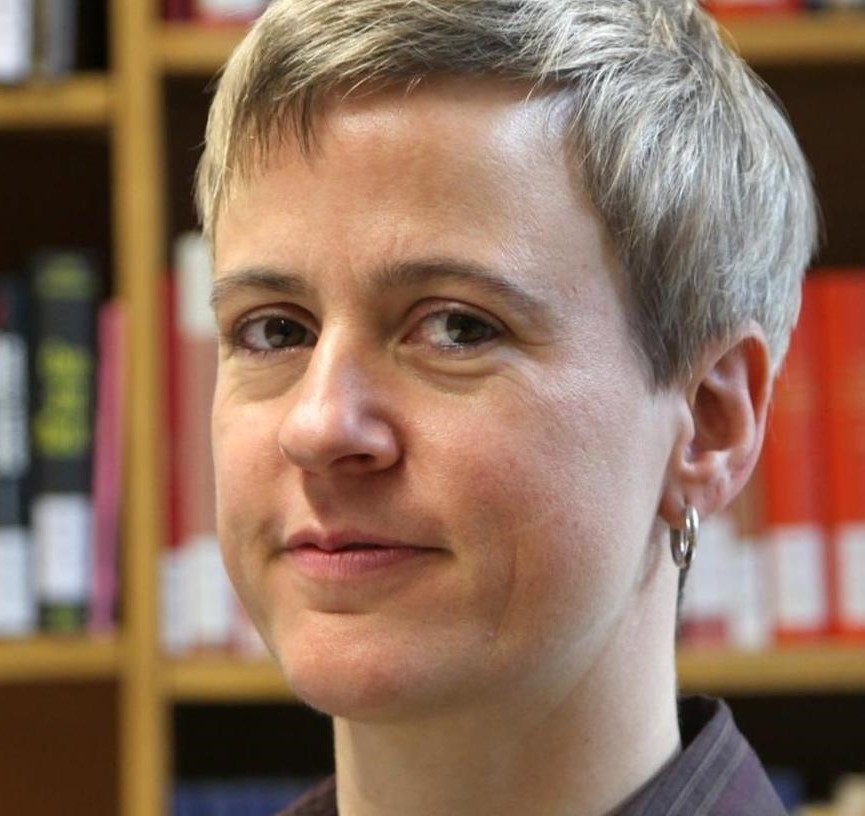
† Julia Obertreis
With many condolences and grief we hereby must announce, that our network member and appreciated colleague Julia Obertreis is no longer with us.
We are full of sorrow about the loss of this dear friend, colleague and mind and we are wishing Julia’s family, friends and colleagues courage and peace during this time of mourning.
For those wanting to keep Julia in our memory, there is the possbility to contribute with a letter for a virtual memory wall, so that we can honour her character and mind forever.
Position:
Professor at the Department of Modern and Contemporary History, focusing on the history of Eastern Europe, FAU Erlangen
Summary:
Julia Obertreis has led the Chair of Modern and Contemporary East European History since 2012, after finishing her habilitation process in modern history in Freiburg, and her PhD in history at the FU Berlin and working as an academic council member in Modern and Eastern European History at the Albert-Ludwigs-University in Freiburg. Among other things, she has been chairperson (2015-2021) and is on the board of the Association of Eastern European Historians e.V. as well as part of the editorial board of the journal Slavic Review and member of the Scientific Advisory Board of the Research Information Service (FID) of Eastern, East-Central and Southeastern Europe since 2018.
Research Focus:
- Russian Empire and the Soviet Union as empires and multi-ethnic empires, (focus on Central Asia)
- Infrastructure and environmental history (focus on water infrastructure)
- Global history and Eastern European history
- Media, cultural and social history of the People’s Republic of Poland
- Oral history as a method and related to socialist societies
Publications linked to the network:
- Imperial Desert Dreams. Cotton Growing and Irrigation in Central Asia, 1860–1991. Göttingen: V&R unipress, 2017 (=Cultural and Social History of Eastern Europe/ Kulturund Sozialgeschichte Osteuropas, 8).
- “Karrieren, Patronage und „Infrastrukturpoesie“. Dimensionen der Infrastrukturgeschichte am Beispiel des russländischen und sowjetischen Zentralasien.“ In Wasserinfrastrukturen und Macht von der Antike bis zur Gegenwart = Historische Zeitung, Sonderheft 63, edited by Birte Förster and Martin Bauch, 232-265. Berlin u.a. 2015
-
Julia Herzberg

Position:
Professor for the history of East Central Europe/Russia in the pre-modern era, department of History and Culture, LMU Munich
Summary:
Julia Herzberg studied German, History and Russian in Cologne, Bielefeld, Volgograd and Moscow and, after receiving her PhD, worked as a research fellow at the Rachel Carson Center for Environment and Society in Munich. From 2013, she was an academic council member for Modern and Eastern European History in Freiburg and is part of the European Society for Environmental History. Since 2016, she has been a professor for Russian and Eastern European History at the HLMU in Munich.
Research Focus:
- History of Russia from the Middle Ages to the 20th Century
- Russia in the Age of Enlightenment
- Scientific, technological and environmental history of East Central and Eastern Europe
- Popular autobiography/biographical research
- History of historiography
- Religious practices
Motivation as a part of the network:
Publications linked to the network:
- Umweltgeschichte(n). Ostmitteleuropa von der Industrialisierung bis zum Postsozialismus (= Bad Wiesseer Tagungen des Collegium Carolinum, Bd. 33), Göttingen 2013. [edited together with Horst Förster and Martin Zückert].
- “Exploring Ice and Snow in the Cold War.” In: Ice and Snow in the Cold War. Histories of Extreme Climatic Environments, (= The Environment in History), New York 2018, S. 3-19, [edited together with Christian Kehrt and Franziska Torma].
-
Susanne Frank
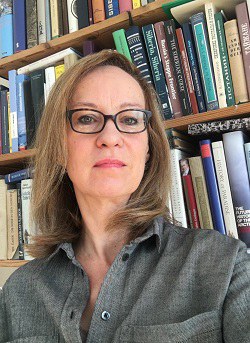
Position:
Head of Faculty Department of East Slavic Literure and Culture, Institute of Slavic Studies, Humboldt-University Berlin
Summary:
After studying and completing a PhD in Slavistic Studies and History in Vienna, Konstanz and Moscow, Susanne Frank conducted research in Konstanz, Erfurt, Regensburg and at the HU Berlin. Since 2010, she has been teaching and researching at the HU Berlin in her department of East Slavic Literature and Culture. She engages in interdiciplinary work on literature in a global perspective and founded the “Berlin-Brandenburg Ukraine Initiative”.
Research Focus:
- Literature as an instrument of nation building, empire building and transnationalization in the context of other cultural discourses
- Literary strategies of documentation in the field of tension between fiction and anti-fiction
- Literature and history/historical narration in the field of tension between narration and anti-narrativity (special topic: literary depiction of war)
- Text and image: literary strategies of illustration/representation (traditions of affective rhetoric, ekphrasis, poetics of the sublime)
Motivation as a part of the network:
Publications linked to the network:
- “Arctic Archives: Ice, Memory and Entropy. ” Bielefeld: Transcript, 2019 [edited together with Kjetil Jakobsen].
- “Transformationsästhetiken der Moderne: Symbolismus – Sozrealismus. Am Beispiel der Symbolik von „Weiß“, „Schnee“ und „Eis“.“ Wiener Slawistischer Almanach 73 (2014): 371-400.
-
Mieka Erley

Position:
Associate Professor of Russian and Eurasian Studies, Colgate Univerity, New York
Summary:
Mieka Erley has been teaching at Colgate University, New York. She is the author of On Russian Soil: Myth and Materiality, which appeared in the Northern Illinois Press/Cornell University Press Series in Slavic, East European, and Eurasian Studies in 2021.
Research Focus:
- Slavic studies on environmental humanities
- Interpretations of literary and cultural movements
- Ecocriticism
- Intersection of cultural and material history
Motivation as a part of the network:
Publications linked to the network:
- “On Russian Soil: Myth and Materiality”- DeKalb: Northern Illinois Univ. Press, 2021.
- “‘The Dialectics of Nature in Kara-Kum’: Andrei Platonov’s Dzhan as the Environmental History of a Future Utopia,” Slavic Review 73, no. 4 (Winter 2014): 727-750.
-
Andy Bruno
Position:
Environmental Historian and Associate Professor and Director, Department of History, Northern Illinois University
Summary:
Andy Bruno is an environmental historian of Russia and the Soviet Union with an interest in many aspects of human interactions with the natural world. His main scholarly ambition has been to demonstrate the pertinence of environmental perspectives to major questions in Russian history. This goal has led him to write about animals and avalanches, energy and economy, revolution and repression, waste and water, science and socialism, and other themes. He has highlighted the role of nature as an actor in history and the place of the Russian environmental experience in comparative and global history. A focus on specific locations—the Russian Arctic and the Siberian taiga, for instance—also characterizes his approach to environmental history. Most recently, his research has turned toward questions of human engagements with outer space and the variable climate system on this planet.
Research Focus:
- Russian history
- Comparative environmental history
- Climate history
- World history and European history

Motivation as a part of the network:
Publications linked to the network:
- “The Nature of Soviet Power: An Arctic Environmental History.” Cambridge: Cambridge, Univ. Press, 2016.
- “A Eurasian Mineralogy: Aleksandr Fersman’s Conception of the Natural World,” Isis: A Journal of the History of Science Society 107, no. 3 (September 2016): 518-539
-
Elena Fratto
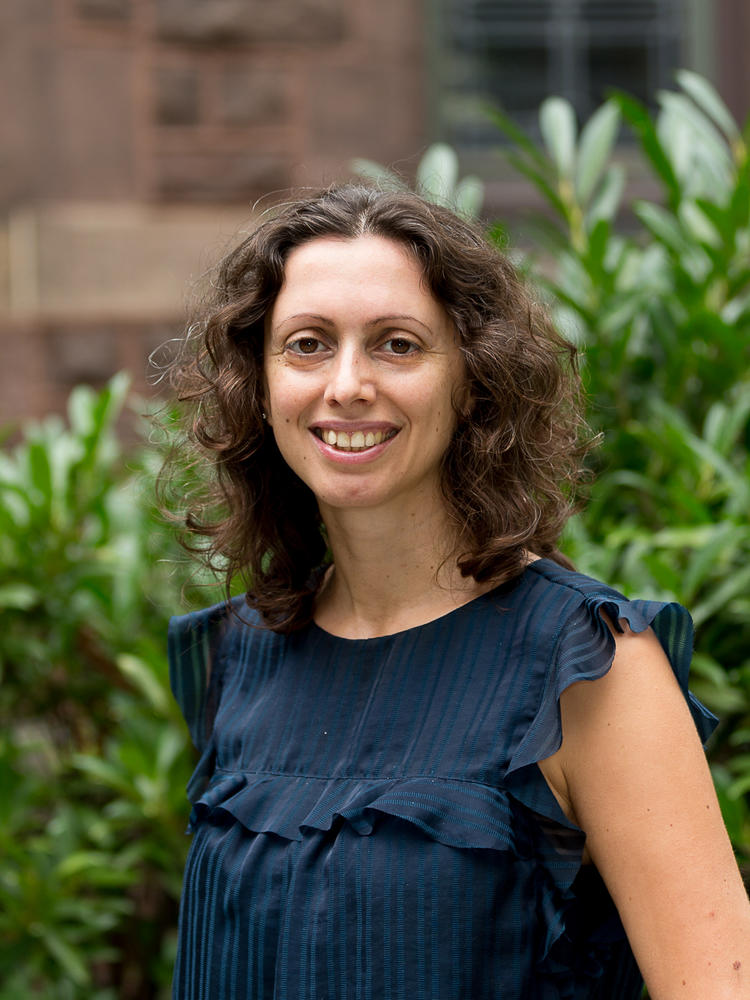
Position:
Assistant Professor, Director of Undergraduate Studies Role, Department of Slavic Languages and Literatures, Princeton University
Summary:
Elena Fratto holds an MA in History of Science (2013) and a PhD in Comparative Literature (2016) from Harvard University, in addition to a PhD in Slavic Languages and Literatures (2009) from the University of Milan. Her research and publications address the rhetorical, stylistic, and structural intersections of literature and science, with a specific focus on medicine, astronomy, and non-Euclidean geometries in the late nineteenth and the early twentieth century. Fratto’s current research situates itself in the field of the environmental humanities and investigates the concept of “metabolism” as energy transformation in Russian literature and culture at the turn of the twentieth century.
Research Focus:
- Intersection of Literature and Science
- Medicine
- Astronomy
- Geometry
- Environmental Humanities
- Transformation
Motivation as a part of the network:
Publications linked to the network:
- Medicine, Literature and the Arts in Russia. Edited by Elena Fratto and Alisa Lin. Special issue of SEEJ, forthcoming, Summer 2022
- Medical Storyworlds: Health, Illness, and Bodies in Russian and European Literature at the Turn of the Twentieth Century. Edited by Elena Fratto. New York: Columbia University Press, 2021.
- Russian Literature of the Anthropocene. Edited by Alec Brookes and Elena Fratto. Double special issue of Russian Literature. Volumes 114-115, June-July 2020.
- Intersection of Literature and Science
-
Philipp Kohl
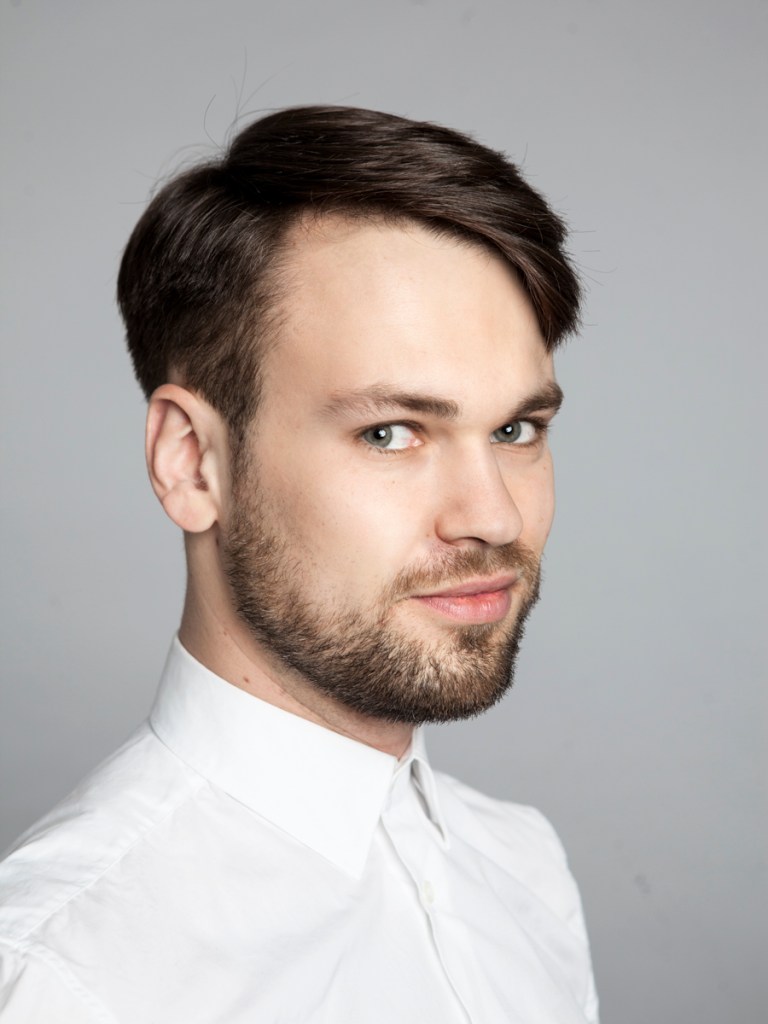
Position:
Network Coordinator/
Research Associate, LMU Munich, Institute for Slavic LiteratureSummary:
Philipp Kohl received his PhD in General and Comparative Literature from HU Berlin in 2017. Since 2019, he has been part of the Institute for Slavic Philology of the LMU as a research associate.
Research Focus:
- Russian literature and culture of the 18th-21st centuries century
- Literature and science (geological and biological time models)
- Autobiographical writing
- Anthropocene theories
- Sound studies
- Moscow conceptualism
My Motivation as a part of the network:
Publications linked to the network:
- “Autobiographie und Zoegraphie. Dmitrij A. Prigovs späte Romane.” Berlin et. al.: De Gruyter, 2018.
- ”Scales of sustain and decay. Making music in deep time.” In Popular Music and the Anthropocene, special issue of Popular Music, edited by François Ribac, and Paul Harkins, 108-120. Cambridge: Cambridge University Press, 2020.
-
Clemens Günther

Position:
Network Coordinator/
Research Member and Professor, Culture Department of the East-Europe Institute, FU BerlinSummary:
After finishing his studies in European ethnology and philosphy as well as Eastern European and cultural studies in Munich, Berlin and New York, Clemens Günther completed is PhD on the metahistoriographical revolution in Russia in 2019. Since 2017 he has been a professor at the cultural studies department at the FU Berlin.
Research Focus:
- Genre poetics (historical novel, production novel, documentary, travel literature)
- Literature and science (meteorology, climatology, cybernetics, history)
- Postcolonialism (history of imagination: Baku, Turkmenistan, Soviet constructions of globality)
- Ecocriticism (especially natural disasters, climate change fiction, ecocide)
My Motivation as a part of the network:
Publications linked to the network:
- “Wüstenvisionen. Literatur, Klima und Transformation in Imaginationen Turkmenistans.“ In Climate Engineering. Imaginationsgeschichten künstlichen Klimas (=Sonderband Dritte Natur), edited by Urs Büttner and Dorit Müller, 57-69. Berlin: Matthes und Seitz, 2021.
- “Von Tauwetter und Tiefdruckgebieten. Literarische Meteorologie bei Daniil Granin und Anatoliĭ Gladilin,“ Zeitschrift für Slawistik, no. 2 (2021). [forthcoming].
-
First Network-Conference
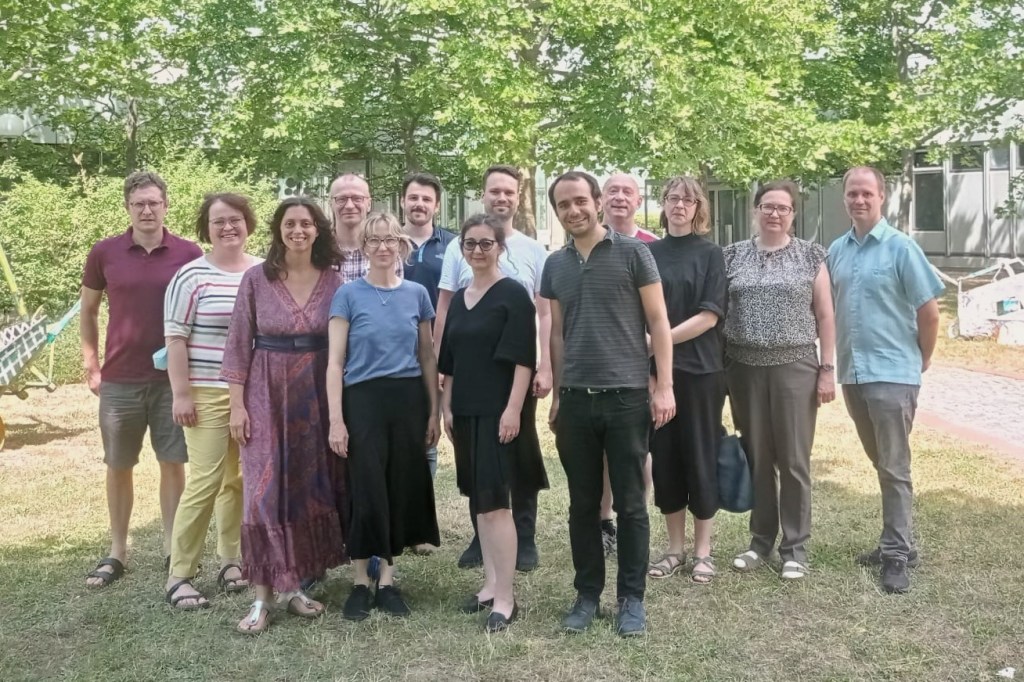
From 24th to the 26th June 2022, the first in-person meeting of our Russian Ecospheres network took place in Berlin. After online contacts and some preparatory group work earlier this year, the focus was on familiarizing ourselves with our fellow scholars and their work and on discussing relevant paradigms formative for our research. Interactive formats such as joint text reading, group work, and conceptual-historical investigations were experimented with to provide a common theoretical and historical basis for further work.
Day 1:
First Panel:
After an introduction on the structure, the network’s programmatic and a preliminary timeline, the first panel was devoted to joint readings of basic texts in the field. The reading of Peter Sloterdijk, Vladimir Solov’ev and Vladimir Vernadskii brought to light the different roots and understandings of the concept of the sphere. As we learned, Sloterdijk conceives of man as a sphere-forming being that produces structures of immunization and life-forms of interiorization. While he sees man as a shaper of his environment and “Lebenswelt“, Vernadskii conceptualizes man as a heterotrophic organism dependent on interaction with plants and animals. At the same time, humans are a central and unique, literally geological force in the biosphere, since only they are capable of totally reshaping it through mind and will. This diagnosis makes Vernadskii a pioneer of the Anthropocene paradigm widely discussed today.
This discussion was followed by a debate on Friedrich Engels’ “Dialectic of Nature“, a work of central relevance to the socialist understanding of nature. Engels outlines the evolutionary stages enabling man to influence his environment, but also acknowledges the limits of his influence, since his endeavors, in many cases, turn against him and his achievements. Finally, Dmitrii Likhachev’s influential essay “The Ecology of Culture” was read. Likhachev pleads for the expansion of ecology into cultural theory in the late 20th century. He diagnoses a simultaneous crisis of nature and culture and argues for a basic preservationist attitude toward cultural heritage, which puts him at a distance from the Soviet modernization project.
Second Panel:
The second conference panel introduced key terms and concepts for ecological thinking in the Russian context. Tatjana Petzer presented different notions of zone in geography, sociology, climatology, urbanistics, culture and other areas and traced the ecological career of this multi-faceted concept. Elena Fratto continued the section with a talk on metabolism, pointing towards similarities and differences in the understanding of this key term in 19th century thought, particularly in Justus Liebig and Karl Marx. Philipp Kohl, finally, explained varying notions of irreversible processes, the notion of which is closely linked to the second law of thermodynamics and the idea of entropy.
Day 2:
First Section:
After concluding day one with a joint dinner, the following day started with talks on the state of research in the fields linked to ecology in Russian culture and history and beyond. Timm Schönfelder, who is pursuing a post-doctoral project on 19th century hunting, opened the section with a contribution on the history of hunting which he looked at through the lens of human-animal studies. Colleen McQuillen followed him with a talk on energy humanities, examining interlinkages between energy and culture and giving a short insight into her own research on coal and culture in the Donbas. Andy Bruno, in the third talk of the section, introduced the recently emerging paradigm of Planetary Humanities central to the theoretical work of thinkers such as Dipesh Chakrabarty, Frédéric Neyrat and Gayatri Spivak. They share the aim of developing a non-anthropocentric view towards the conditions of survival of earth in the age of climate change.
Second Section:
After lunch, Clemens Günther took up this climatological thread in his talk on literary meteorology, a theoretical paradigm popularized in German studies and linked to the aesthetic semanticization and cultural epistemology of weather and climate phenomena. Julia Herzberg concluded this section with a contribution on the Russian cold and climate ideas in Russia and beyond, with a special focus on the 18th century and the ideas on the relation between character and climate from this period that are still influential today.
The second day of the conference was eventually completed by a keynote talk by our meeting guest Julia Lajus, a current fellow at the Max Planck Institute for the History of Science, who had left Russia after the invasion in Ukraine. She gave a talk on natural resource inventories in Russia during WWI and referred to various scientific and infrastructural projects trying to overcome past dependencies on foreign imports, a topic of great relevance in light of today’s Western sanctions against Russia.
Day 3:
The third and final day of the conference was focused on the preparation of a handbook on Russian ecological thinking. Publishing this handbook is one of the key projects of the network, striving to provide a valuable source for understanding key concepts and discourses of ecology in the history of the Russian and Soviet empires. After initial input from a working group that had already been formed earlier this year and which presented potential ideas for structuring the handbook, a group work section discussed two potential sub-sections of the handbook, one on Empire & Ecology and one on Green Culture. The concluding discussion took up the ideas gathered together and agreed on further steps for preparing the handbook.
Funded by:
Coordinated by:
-
Network Kick-Off

We are pleased to announce the official start of our DFG-funded scientific network “Russian Ecospheres. Forms of Ecological Knowledge in Russian Literature, Culture and History”, which brings together literary, cultural, historical and natural scientists from Europe and North America.
The aim of the network is to historically outline ecology as a figure of knowledge, a category of analysis and an interdisciplinary paradigm in research on Russia and the Soviet Union, to establish it in terms of research policy and to popularize it in the wider public.
Setting and implementation of goals:
To start with, the network is going to hold a three-day conference from June 24th to 26th, at the Freie Universität Berlin. At this conference, basic texts on the history of ecological thinking will be discussed, studies of the history of ideas and concepts presented and the state of research on sub-areas of ecological research debated.
For this purpose, transpositions of ecological knowledge between literature, culture and society are examined in paradigmatic subject areas such as research on the Russian Arctic, deserts, forests and soils. From a systematic point of view, the network discusses approaches that update specific forms and concepts of ecological thinking from the Russian tradition (e.g. the concept of the sphere, ecological semiotics or geopoetics) and make them suitable for current theoretical debates.
Structures are established in the form of publications (anthology and handbook on ecological thinking in Russia and the Soviet Union) and platforms (international study group for ecological issues related to Russia and the Soviet Union), which increase the visibility and profile of the hitherto, especially in literary and and cultural studies, only fragmentary research approaches to ecology.
Funded by:
Coordinated by:
DFG-Netzwerk
Forms of Ecological Knowledge in Russian Literature, Culture and History
 "Russian Ecospheres"