Conference Report: Russian Ecospheres 2nd Annual Meeting (14–16 July 2023, LMU Munich)
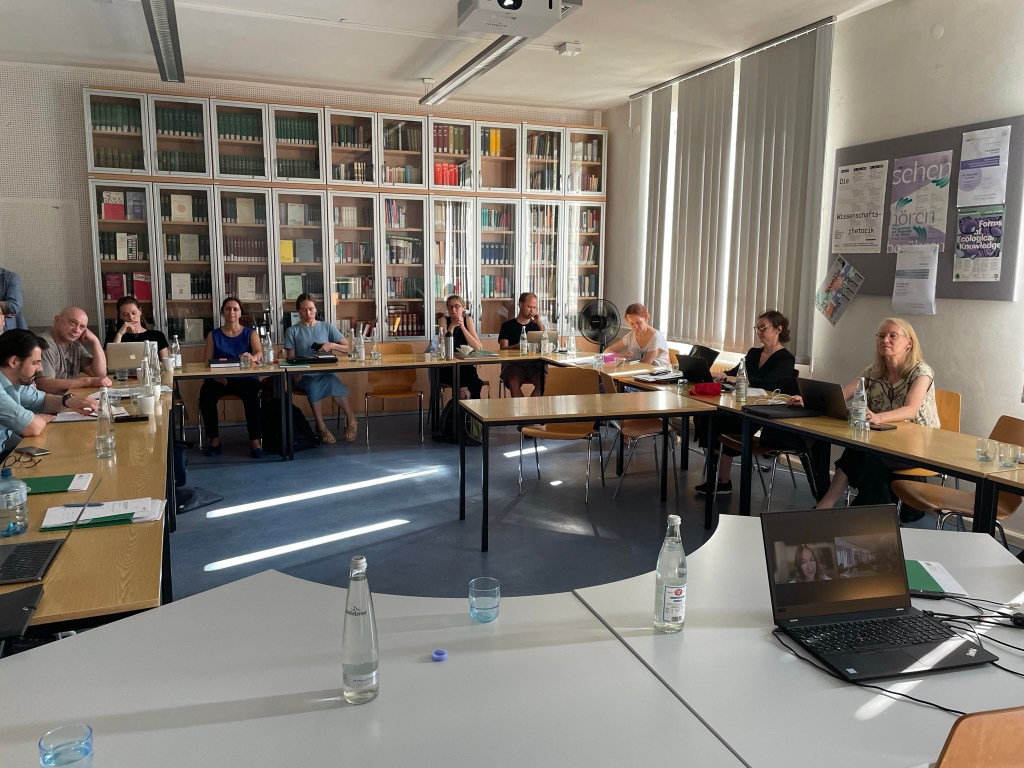
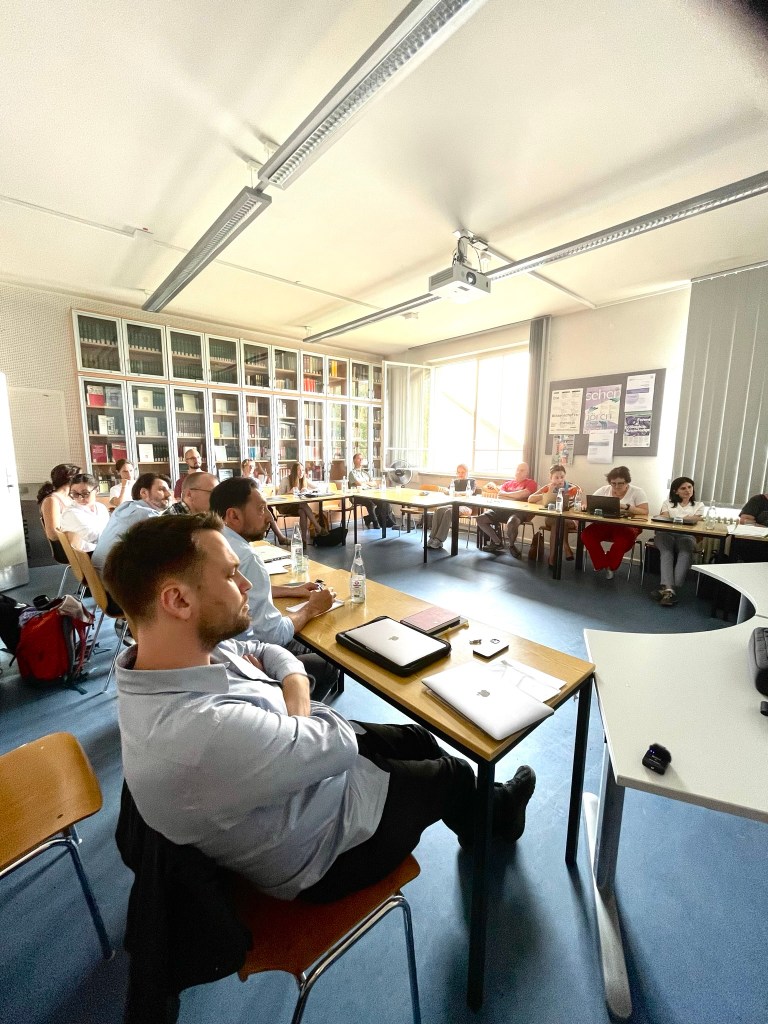
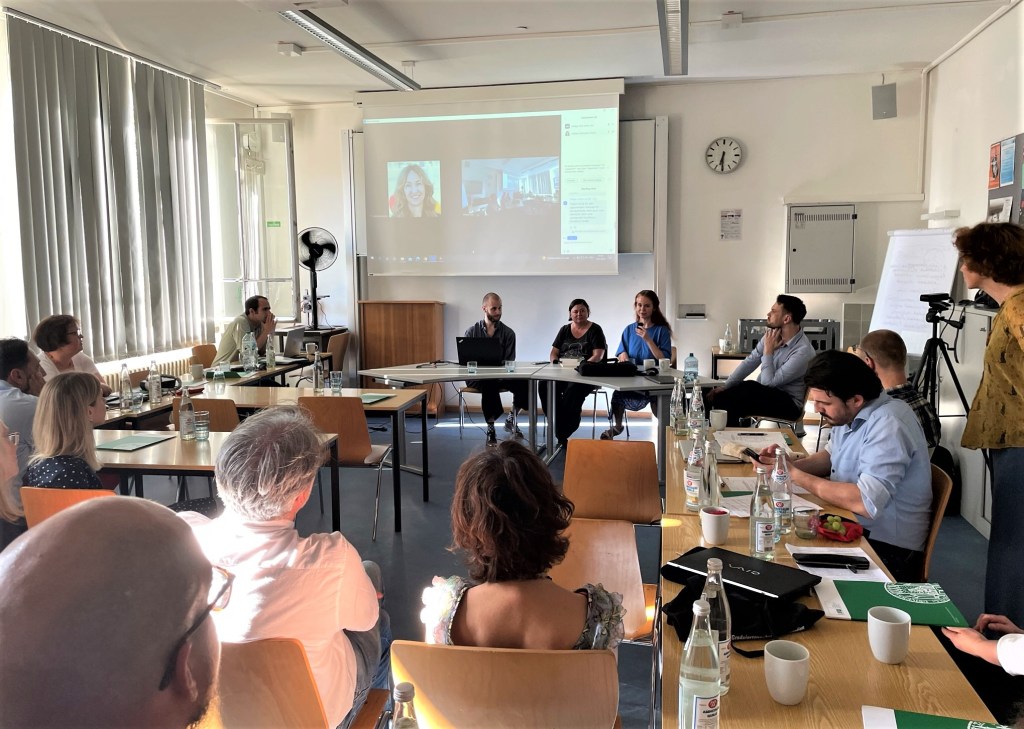
Following our initial meeting at Freie Universität Berlin in June 2022, our second annual meeting, entitled “Forms of Ecological Knowledge”, took place at Ludwig-Maximilians-Universität München on July 14 – 16. Our speakers explored ecological ideas and practices as forms, not only in the sense of artistic form, but also with respect to the history of knowledge, society and institutions.
Questions of form figure prominently in contemporary aesthetics, social theory and ecocriticism. This trend applies to such different movements such as Franco Moretti’s quantitative literary studies, the revival of Goethe’s morphology, New Formalism or the search for an extended understanding of form beyond formalistic constrictions. In contrast to past waves of form thinking such as inter-war formalism and post-war structuralism often accused of aestheticist and abstractive tendencies, these movements argue for “expanding our usual definition of form in literary studies to include patterns of sociopolitical experience” (Caroline Levine). This boom in form(alist) thinking has also touched ecocriticism and environmental studies. Already in 2007, Timothy Morton has argued to “move[ ] beyond the simple mention of ‘environmental’ content, and toward the idea of environmental form”, acknowledging the ways ecological knowledge is gained, classified and narrated.
Building on Levine’s formal theory, this conference asked how forms constrain, differ, overlap, intersect, travel and do political and epistemological work across time and space. In dialogue with case studies form various research contexts, it discussed the “affordances of form” (Levine), taking into account the materiality of form, its appropriation by actors in the field and its variation in distinct settings. It applied a broad understanding of form, bringing (more traditional) formal elements such as literary and textual genre or narrative in dialogue with an extended understanding of form as a means of social and political structuring (e.g. through colonial or gender hierarchies, the establishment of epistemological networks etc.).
Of special importance were the following research questions:
- How has nature been put into form in the history of the Russian and Soviet empire?
- Which textual modes of representation emerged over time?
- How did they change?
- How do textual forms migrate and change across disciplines, first and foremost between arts and science?
- What are disciplinary, political and social configurations behind the formation of ecological knowledge?
- How do Russian/Soviet forms of ecological knowledge relate to other contexts?
- Are there distinct modes and tendencies in appropriating knowledge from other state/empires? How do ‘forms’ travel?
- How do different forms of knowledge compete and contrast within the empire?
- How does Russian/Soviet cultural, literary and historiographical theory conceptualize form in an ecological perspective?
- Which concepts are informed by scientific ideas (evolutionary theory, morphology, paleontology)?
- How can they be operationalized as (proto-)ecocritical devices of analysis?
Day 1
First Section:
Opening the first section “Theoretical Perspectives”, Susi Frank asked in her talk “Are the Premises of Econarratology in Formalism?”. She expanded the notion of “formalism” beyond canonized Russian Formalism by introducing the Ukrainian writer Maik Yohansen. As a manual for nature writing avant la lettre she discussed his 1928 book How A Story Is Built, one of the first creative writing handbooks, as a poetological adventure going beyond the idea of a mere description of nature.
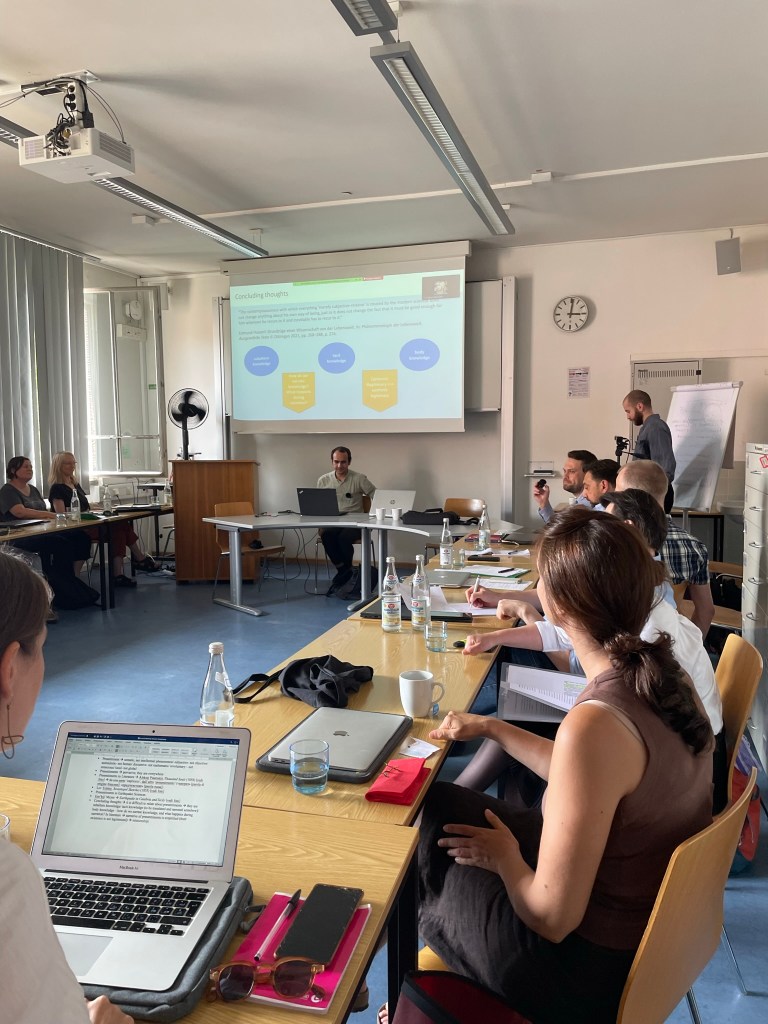
Clemens Günther approached form through the lens of conceptual history: departing from a historical semantics of presentiment (‘predchuvstvie’), he compared the use of this narrative and epistemic device in realist works by Pisemsky and Tolstoy and in scientific and literary texts on earthquake prediction. He traced the textual operations of bringing the subjective, objectless and bodily centered presentiment into a scientific category while reflecting upon the epistemic and aesthetic (il)legitimacies accompanied by this endeavor.
Second Section:
The second section “Political Ecologies” centered on the Soviet period and started with Jonathan Oldfield’s presentation on “Soviet Articulations of Natural Systems and Society-Nature Interaction”, expanding on his 2021 book The Soviet Union and Global Environmental Change. Oldfield demonstrated the growing awareness of environmental crisis and change in the late Soviet period that was heavily influenced by the reception of Vladimir Vernadsky’s theories. Andy Bruno introduced his new project “Forms of Growth in Soviet Socialism: Reconsidering Productivism in Light of Scholarship on Degrowth”. Suggesting different paradigms of growth throughout Soviet history, Bruno asked how Soviet productivism could inform contemporary debates about de-growth and alternatives for capitalism.
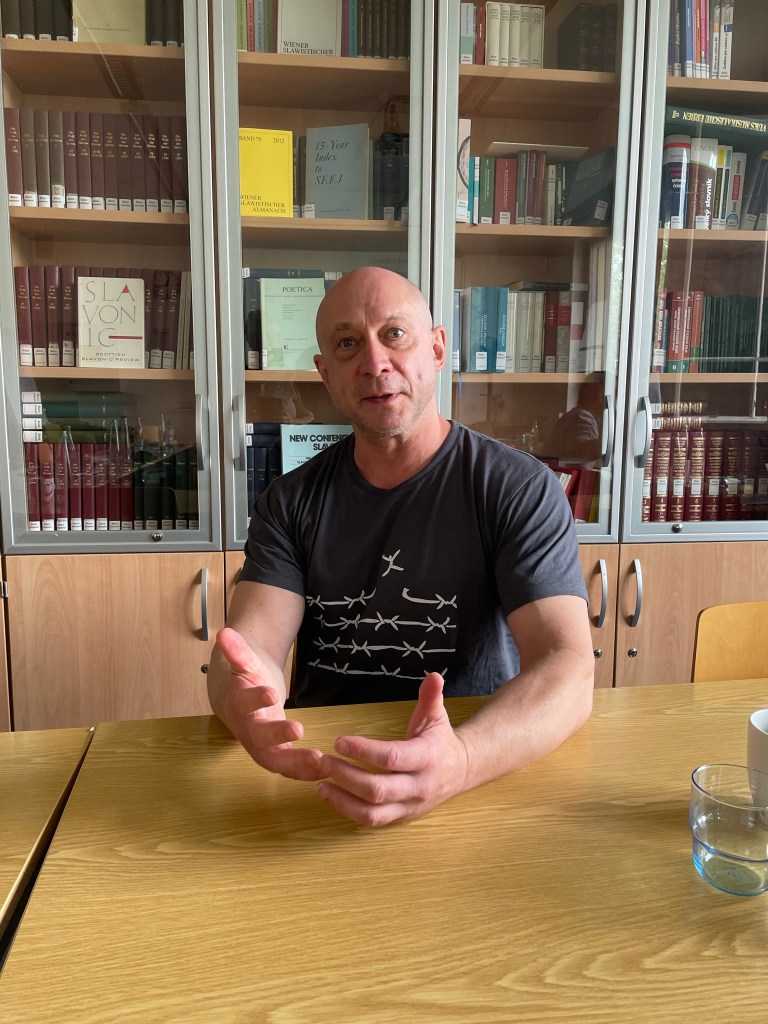
Bruno also gave a general insight into the netoworks interdisciplinary exchange via an interview, accessable here:
The section concluded with Tatjana Petzer’s talk on Vernadsky’s concept of autotrophy and its cultural reflections. By applying the biological and botanist concept of autotrophy to human relationships and society, Vernadsky inspired utopian vision of of growth and alimentation were discussed on a socioeconomic and cosmic level, as Petzer showed on many examples from science, literature, and architecture.
The highlight of this first conference day was a poetry reading by Anna Glazova, who read from her book For the Shrew that was awarded with the Andrey Bely prize in 2013 (an English translation has been published this year). In her introduction, our guest Oxana Timofeeva commented on Glazova’s poetical appropriations of animals with respect to the ideas of Gilles Deleuze and contemporary philosophy. In the discussion, Glazova not only shared insights into her poetic working process, but also on her work as a translator of German poetry into Russian.
Day 2
Third Section:
The second conference day started with the section “Narrative Forms of Ecological Knowledge”. Our guest Mariia Koskina, a postdoctoral researcher at the University of Fribourg, showed in her talk on Soviet development in Siberia how hydrological infrastructure projects since the 1950s shaped notions of timescapes at various societal and institutional levels. By semantically charging the Siberian rivers with history and mythology, the Soviet authorities hoped to establish relations between the people and the environment and, thus, to enhance their commitment to this infrastructural project. Mika Perkiomäki’s talk on the timely topic of representations of nuclear power plants since Russia’s full scale invasion of Ukraine examined changes of nuclear mythologies, such as the ‘peaceful atom’, under conditions of war. Timm Schönfelder, in his talk “Narrating the Hunt. Trajectories of Venatic Knowledge Towards the Fin de Siècle”, explored the ways hunting was narrated in ego-documents, guides and exhibitions in the 19th century, identifying common tropes and narratives across (Eastern) Europe but also discussing the form and reproducibility of hunting knowledge to a wider audience.
Fourth Section:
Section 4 on “Models of Evolution” started with Georgy Levit’s presentation on Nikolai Mikloucho-Maclay. Starting his career as a student of Ernst Haeckel, who coined the term “ecology”, Mikloucho-Maclay later questioned and undermined Haeckel’s racist anthropology. Doing field work in Papua New Guinea, he falsified Haeckel’s assumptions of this alleged anthropological “type” by introducing ethnographic methods of participant observation and meticulous documentation into ecology and anthropology.
Philipp Kohl’s talk “Narrating the First Forms of Life: Aleksandr Oparin and Vadim Safonov” discussed Oparin’s theory of the origin of life, also influenced by Haeckel, not only as a primal scene of differentiation between an individual body and an environment, but also as a formal challenge to narrative in Safonov’s speculative fiction work The Master of the Planet (1933).
Fifth Section:
Section 5 on “Ecological Metaphors” opened with a paper by Mieka Erley on “Soviet Practices of Closure in Ecology and Narrative”, discussing how theorists like Serhiy Podolinsky and writers like Evgeny Zamyatin and Stanisław Lem conceptualized closed systems as theoretical and narrative strategies against entropy and the heat-death of the universe. Elena Fratto, in her talk “Food, Environment, and Recycling: The Revolution as Metabolic Activity”, analyzed natural and organicist metaphors in the thought of formalist theorist Viktor Shklovsky with a focus on the scientific concept of metabolism. She also gave insights into the networks processes and goals and the particular outcomes for the different members in an interview, which you can find here:
In the last talk, which Colleen McQuillen delivered online, a close reading of Vasilii Nemirovich-Danchenko’s collection Kama and the Urals (1890) showed that nature served as a constitutive element for the form of the ‘putevoi ocherk’ (travel sketch) and how this genre contributed to a growing awareness of ecological crisis, showing itself in deforestation and local climate change.
Day 3
On the last day of the meeting, the network members discussed ongoing and future activities:
The anthology working group has compiled an extensive list of Russophone texts on ecological themes and is now in the process of drafting a proposal for publishing houses; the handbook working group reported on the next steps towards the publication of the forthcoming Palgrave Handbook of Russian Ecological Culture; the “Cybernetic Ecology” reading group presented their readings and discussions; Tatjana Petzer gave a report on the conference “Green Cultures in Eastern Europe” she organized together with Erik Martin at Karl Franzens Universität Graz in June and the special issue of “Forum Interdisziplinäre Begriffsgeschichte” with contributions resulting from the first meeting 2022 in Berlin.

After these reports, the group discussed further projects, including the third meeting in 2024 (tentative title: “Scales of Ecology”) and a call for activities for smaller workshops.
Further activities of the network and possibilities to take part here:
 "Russian Ecospheres"