-
Network Conference 2023: Forms of Ecological Knowledge
From the 14th to 16th of July 2023, the first public conference of our network will take place under the topic “Forms of Ecological Knowledge. DFG Network “Russian Ecospheres”. It will take place at the Ludwig Maximilian Universität in Munich.
Concept
Our network members will meet in a public conference lasting several days, in which they will present their results and progress in the various working groups and workshops.
The 2023 Russian Ecospheres Network Annual Meeting invites contributions on forms of ecological knowledge in Russia. It asks for textual, discursive, social and political modes of generating, ordering and organizing ecological knowledge. Drawing on the recent resurgence of thinking about form in theory and on historical understandings of form in the natural and social sciences as well as cultural studies, it looks for distinct Russian approaches to form and aims to locate them globally. It is interested in contributions to the conceptual history of ecological form in the Russian and Soviet empire as well as in empirical studies related to the subject.
Our conference in the context of current discourses
We assume that a dialogue about form across disciplines can help to establish a more nuanced notion of “ecological form” (Hensley, Steer). To open up the space for our disparate disciplinary approaches (literary and cultural studies, environmental history, history of science) and transdisciplinary dialogue, we chose an open, multi-angled concept of form. Such an understanding grasps forms as assemblages and configurations of ordering knowledge, characterized by recurrent and shifting patterns and materialized in distinct communicative and institutional forms of organization and genre.
Regarding anticipations of ecological form in Russian and Soviet theory, an ecocritical reassessment of Russian formalism could be a promising starting point to ask how processes of ecological and cultural transformation do influence each other:
Building on Levine’s formal theory of form, this conference asks how forms constrain, differ, overlap, intersect, travel and do political and epistemological work across time and space. In dialogue with case studies form various research contexts (linguistics, genre theory, realism, materialist aesthetics, semiotics of culture, cultural history, kulturologija, philosophy, ethics, theology, anthropology and ethnography, conceptual history, history of science, Umweltgeschichte [environmental history]), we ask for the “affordances of form” (Levine), taking into account the materiality of form, its appropriation by actors in the field and its variation in distinct settings.
Preliminary Programme
From our members:
Traveling Concepts Between Science and Literary Theory
- Philipp Kohl: The Substrata of Form: Paleontological Thought in Soviet Literary Theory in the 1930s
- Elena Fratto: Food, Environment, and Recycling: The Revolution as Metabolic Activity
Ecological Narratives
- Mika Perkiömäki: Forms of ecological narratives in media representations of the Chernobyl and Zaporizhzhia nuclear power plants during Russia’s war on Ukraine
- Timm Schönfelder: Narrating the Hunt. Trajectories of Venatic Knowledge towards the Fin de Siècle
- Mieka Erley: Against Entropy: Soviet Practices of Closure in Ecology and Narrative
Forms of Political Ecology
- Andy Bruno: Forms of Growth in Soviet Socialism: Reconsidering Productivism in Light of Scholarship on Degrowth
- Tatjana Petzer: Autotrophy. An Alimentary Form of Social and Literary Ecology
Reconsidering Vernacular Knowledge
- Clemens Günther: The Form of Feeling: Presentiments in Science and Literature
- Colleen McQuillen: The putevoi ocherk as a tool of epistemological colonization in late 19th C.
- Georgy Levit: On the facets of ecological method: Ernst Haeckel and Nikolai Mikloucho-Maclay
If you would like to subscribe to the Russian Ecospheres mailing list for updates, feel free to register here:
-
Call for Papers: Conference on Hydro-poetics
The Department of Slavic and Hungarian Studies at the Humboldt University in Berlin invited paper proposals for a conference on “Hydro-poetics: an Ecocritical Perspective on Eastern European Arts (1960s-1990s)”.
The conference, coordinated by Russian Ecospheres member Susanne Frank, will be held in Berlin from the 5th till 7th of October 2023.

Water as a cultural phenomenon
Water is our most precious resource but also an element of culture historically charged with diverse meanings and values. The Bible, the Qur’an, and other ancient scriptures, just like modern scientific theories, regard water as the source of all life, as that element which preceded the creation of the earth. Water is a life principle, but also a force of destruction through drought and flood, a potential instrument of erasure and obliteration of landscapes and places of culture. Whether through natural phenomena or by the hand of humanity, sunken vessels, and ancient as well as modern cities are archived and preserved at the bottom of lakes and on the ocean floor. Water is crucial in processes of cleaning, and yet it is becoming a global storage of waste and pollution.
In text and image, water circulates as a quintessential metaphor of change, linked with gestation, birth, and death. Its mirroring capacity, as in the ancient myth of Narcissus, invites figurations of duplicity, visionary sights, and hypnotic effects. Water fluidity conjoins with issues of time and transience (Heraclitus); with memory, translating into motifs of forgetting and forgiving. Water structures the Earth’s surface (oceans), connects and divides (watershed) and delimits (continents). It is used to draw boundaries (left bank vs. right bank).
In human history, water has played a central role as an inter-connecting medium as well as an ill-used material substance: a conduit of travel and war, an instigator of settlements and resettlements, and an energy resource depleted by political, industrial, and economic pursuits.
Motivation for the congress
Our urge to study water as a cultural phenomenon is driven by the current ecological crisis related to the quality and availability of water. Through the symbolic realms of philosophy, literature, film, and visual arts, which reveal the polyvalence of meanings attributed to water, we strive to understand its cultural history. Every culture’s tradition engenders their own symbolic and archetypal meanings in images of water, stemming from place-specific hopes and anxieties, from language, and from shared cultural preconceptions.
The geo-cultural focus of the conference responds to the growing interest in ecocritical interpretations of Eastern European arts in research and scholarship as well as in artistic practices. While ecocritical perspectives on arts originated in Western literary theory of the early 1970s, in the region of Eastern Europe ecocriticism as a method of interpreting and understanding culture was scarce until late 1990s (in contrast to environmental history). Nonetheless, the artistic practice of the late-socialist era holds an immense corpus of works by artists who deal with issues of nature, water (and ecology) as their essential theme.
Reconsidering Eastern European arts from an ecocritical perspective means returning agency to these diverse practices of environmental art and activism. The conference intends to further the discussion around environmental engagement of Eastern European arts in critical terms derived from the specific histories of environmentalism across the socialist states of Eastern Europe, rather than those defined by the Western-centric understanding of environmental art histories. At the same time, through invigorating the aqueous aspect of cultural theory, it is our aim to enhance recognition of water’s critical presence in all spheres of our lives and encourage sustainable eco-political practice.
Preliminary contents of the conference
Possible topics for individual presentations, that were sent in paper to the coordinators till the 31st of January, and that will be reviewed and selected until the 31st of March include
- artworks addressing transformations in the environment and exhibiting growing awareness of the ecological crisis,
- water and power: politics and energy,
- organized nature/ taming of water: reflections on invasion of the natural habitat by built environments (e.g. state-controlled hydro-engineering plans such as power plants, canal, and dam building; but also aqueducts, drainage and irrigation systems, artificial ponds, etc.) and the changing relationship between humans and nature,
- ideologization of hydrological landscape/hydrosphere in Cold War context,
- aquatic imagery, language, and symbols; figurations of ephemerality, fluidity, purification, and shapeshifting,
- hydrotext in late- and post-socialist century prose fiction,
- visual arts, cinema, animation,
- video installations, artificial immersive environments, land art, site-specific environmental installations,
- materiality of water: sounds, textures, surfaces,
- socio-cultural identities and narratives of rivers, seas, and other water bodies,
- environmental conceptualism,
- meteorological metaphors,
- environmental approaches between science and art/art as science.
Furter questions or interested in taking part?
Contact hydropoetics.slawistik@hu-berlin.de
and subscribe to be updated about incoming news about the conference via
-
Annual ASEEES Convention
From the 10th to 13th of November, the second part of the annual “ASEEES” Convention takes part in Chicago.
Here, the international forum for Slavic, East European & Eurasian Studies makes a broad exchange of infromation and ideas possible. By that, further work and intelectual vitality in these fields is engaged and sustained.
“The 2022 ASEEES convention invites discussion of the experiences associated with precarity in Eastern Europe and Eurasia as well as in the academic institutions that employ us to study the region.
Primarily associated with unstable, exclusive, and increasingly uncertain working conditions together with the collective cultural and individual psychological experiences that result, precarity, has become a factor on nearly every aspect of life on our planet.
While the effects of precarity are highly diverse, they have a profound impact, beyond the realms of work, on our environment, health care, mobility, social hierarchies of inclusion and exclusion, and the politics and economy of cultural production, among others.
Changes in the global economy have made precarity especially visible in the present, but these are phenomena with long histories and long-evolving cultures. The peoples of Eastern Europe and Eurasia have created and responded to those threats in important, diverse, and instructive ways, in both the past and the present.”
– ASEEES CommiteeFields of Discourse and Interdisciplinarity
- Anthropology/Cultural Studies
- Early Slavic, East European and Eurasian studies until 1800
- Economic History
- Geography/Urban studies
- History: Central and Southeast Europe
- History: Russian and Eurasian
- Literature: Central and Southeast Europe
- Literature: Russian and Eurasian
Discussion Rounds relating to Russian Ecospheres
Over the days of the convention, several panels and workshops are held, where recent publications are discussed. Relating to the topics of our network, members of our networks and other scientists of the serval fields regarding topics around ecology present their papers and take part in the panels and discussion rounds.
You can find a detailed programme with topics of interest and your personalised search by people, topics and organisation via ASEES interactive program:
Relating to our topics within the network, basic theoretical frameworks such as the Noosphere-approach and its 100 years of history are discussed, taken into context and adapted to different fields. Russian Ecospheres’ member Andy Bruno‘s Paper about Environmental Imaginaries is discussed under the topic of Post Soviet Environmental Futures with questions about how to live in zones of catastrophe and areas of environmental transformations and how current environmental governance of the state react shape the topics about nationalist history, sovereignity and developement.
Panels take place about Ecociriticism, with discussing the heritage of Anton Chekhov and its naturalist tradition. Keywords such as biodiversity, deforetation and pollution are discussed and redefined. Mieka Erley, another member of our network, coordinates a panel about Ecocriticism and Russian Literature, considering negative consequences of environmental degradation and the disturbance of human-nature relations. To do so, she takes into account papers of Russian Ecosphere Members such as Philipp Kohls paper about Ecocritique of the Tarto-Moscow Semiotic-School and Coleen McQuillens paper about the Deforestation and Degeneration in the Urals.
The ecological lense is widened, for example by shedding light on the historical context of activism in post soviet cinema, its correlation to culture and heritage, and on key elements in commemoration and education of era defining contexts such as the Chernobyl catastrophe, its depiction and its aftermaths.
Take part in the discussions and register for the plural forms of interdisciplinary exchange via the ASEEES webiste:
-
Obituary of Julia Obertreis
In silent mourning and with much grief we hereby must say goodbye to our valued network member and appreciated colleague
Julia Obertreis
who passed unexpectedly last week at the age of 54.
We give our condolences to the family, friends and colleagues and want to honour Julia’s character and her contributions within her family and friends, but also within the research network, which has lost a dear member and bright mind.
Many of our network members have been in close contact and exchange with Julia and her original ideas, and together as well as with others, Julia has contributed to the sphere of contemporary history about Eastern Europe and as an inspiring professor for many of her students at the FAU in Erlangen. As an editor of the Slavic Review and member of the Scientific Advisory Board she enriched the scientific field with her publications on Russian and multi-ethnic empires, infrastructure and environmental, global and Eastern European history and many more.
We are full of sorrow about the loss of this dear friend, colleague and mind and we are wishing Julia’s family, friends and colleagues courage and peace during this time of mourning.

For those wanting to send a short letter of condolence or a honouring of Julia’s participation and appreciation, we can publish them collectively and thus announce our support through a lasting “memory wall”.
-
Workshop: Noosphere – Ecosphere – Semiosphere

Together with Julia Lajus, professor at LMU Leipzig, our network member Julia Herzberg organized the workshop
“Noosphere – Ecosphere – Semiosphere: Explorations into Environmental Thoughts”
It took place in cooperation with the Rachel Carson Center in Munich,
on October 6th 2022.
Topic:
The workshop addresses the current interest in conceptualizing the ongoing geological period of the history of Earth, making the discussions relevant to the current debate on environmental governance and governance in general.
The Anthropocene demands a deeper look into the predecessors of such thinking, and the Russian-Ukrainian and Soviet geochemist Vladimir Vernadskii, who named humankind “a geological force,” is undoubtedly among them.
Vernadskii’s legacy was adapted to a broader context of ecological thought in Russia and beyond, focusing on his ideas on Noosphere as a new state of biosphere, “a sphere of reason.” Its concept was compared to related research and the causes of the weak state of planetary thinking in contemporary Russia were discussed.
As part of this, Russian Ecospheres’ member and coordinator Philipp Kohl gave a talk on Lotman’s semiosphere.
Funded by:
Coordinated by:


-
Honoring Research: The ASEEES Award Ceremony
Held in this fall, the 55th annual convention of the Association for Slavic, Eastern European and Eurasian studies (short ASEEES) honors distinguished contributions to Slavic, East European, and Eurasian Studies. It is the largest and most important association for the field of Slavic and Eastern European Studies and therefore vital for the exchange and further research of Russian Ecosphere’s network.
Each year the association choses scholars, who have made major contributions to the field through scholarship of the highest quality, mentoring, leadership, and/or service. With the award, the association grants scholars the renowned and renomeed ASEEES book prizes such as the Wayne S. Vucinich Book prize.
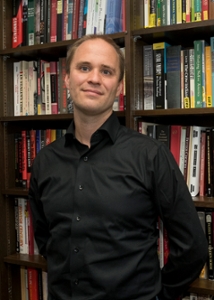
Under the winners and honorable mentions for the Reginald Zelnik Book Prize in History is Russian Ecosphere members Andy Bruno with his publication “Tunguska: A Siberian Mystery and Its Environmental Legacy (Cambridge University Press)”. It depicts the catastrophic impact of the thunderous blasts and blazing fires that descended upon the Tunguska territory of Siberia in 1908. The explosion knocked down an area of forest larger than London and was powerful enough to obliterate Manhattan. In his deeply researched account of the Tunguska explosion and its legacy in Russian society, culture, and the environment, he recounts the intriguing history of the disaster and researchers’ attempts to understand it.
Find further information about Andy Bruno and his motivation for contributing to the network and further activities here.
For those interested in participating at the convention, a detailed programm is accessible via this Link and further information about the ASEEES here:
Funded by:
Coordinated by:
-
Report: Second Network Conference
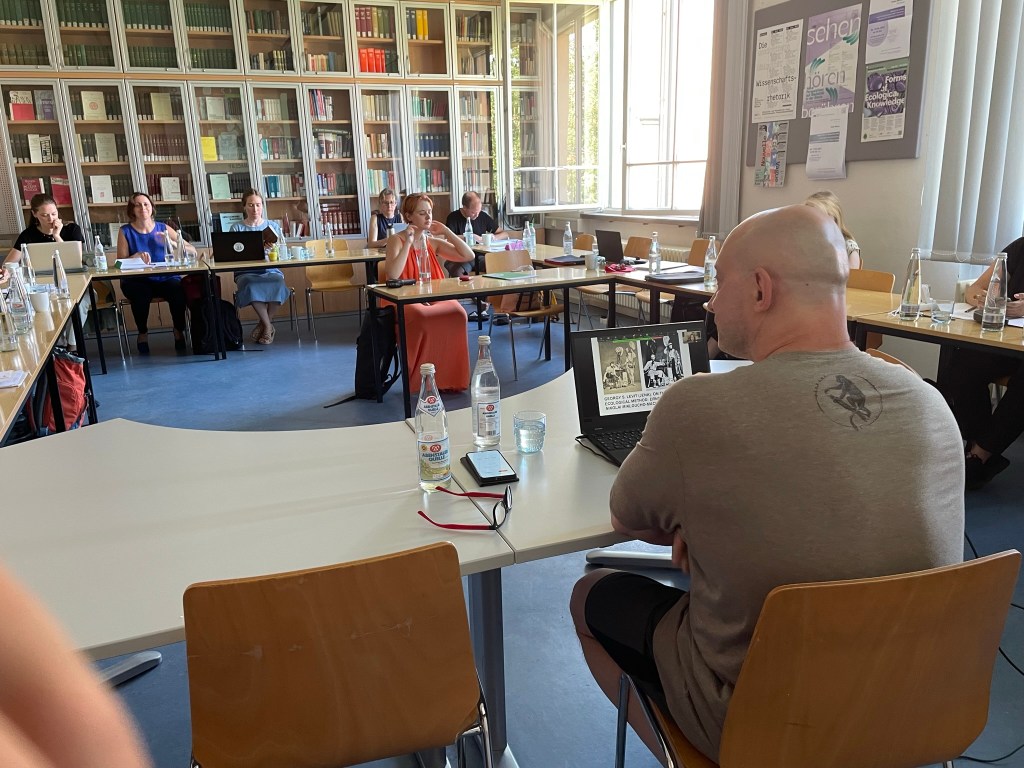
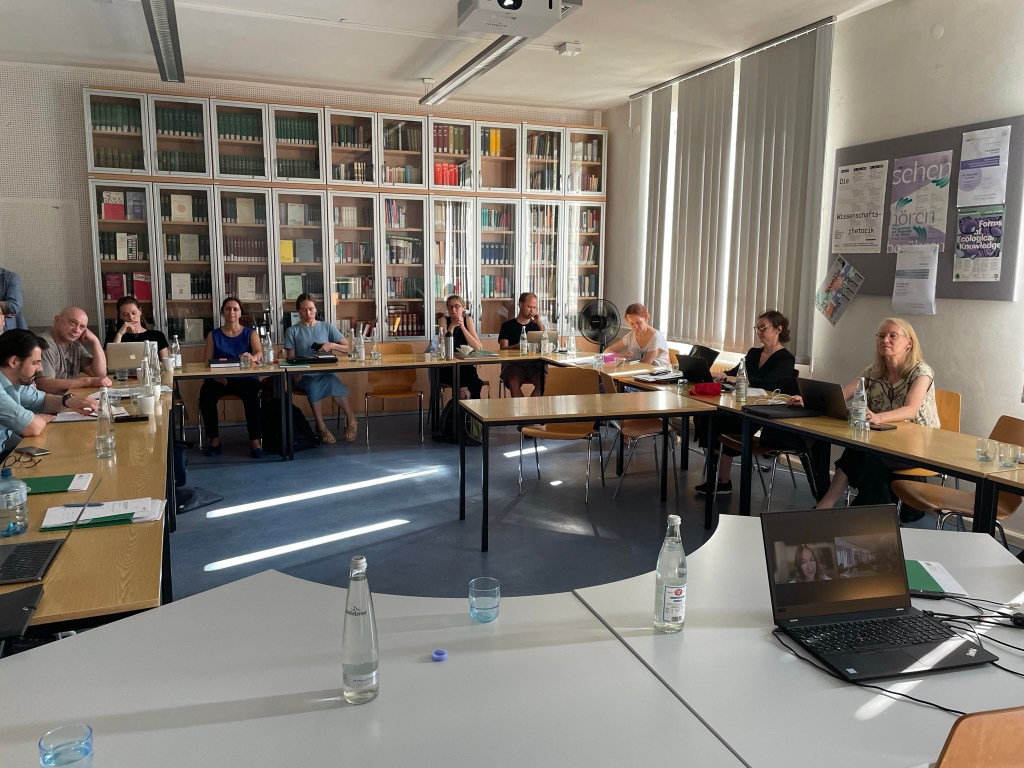
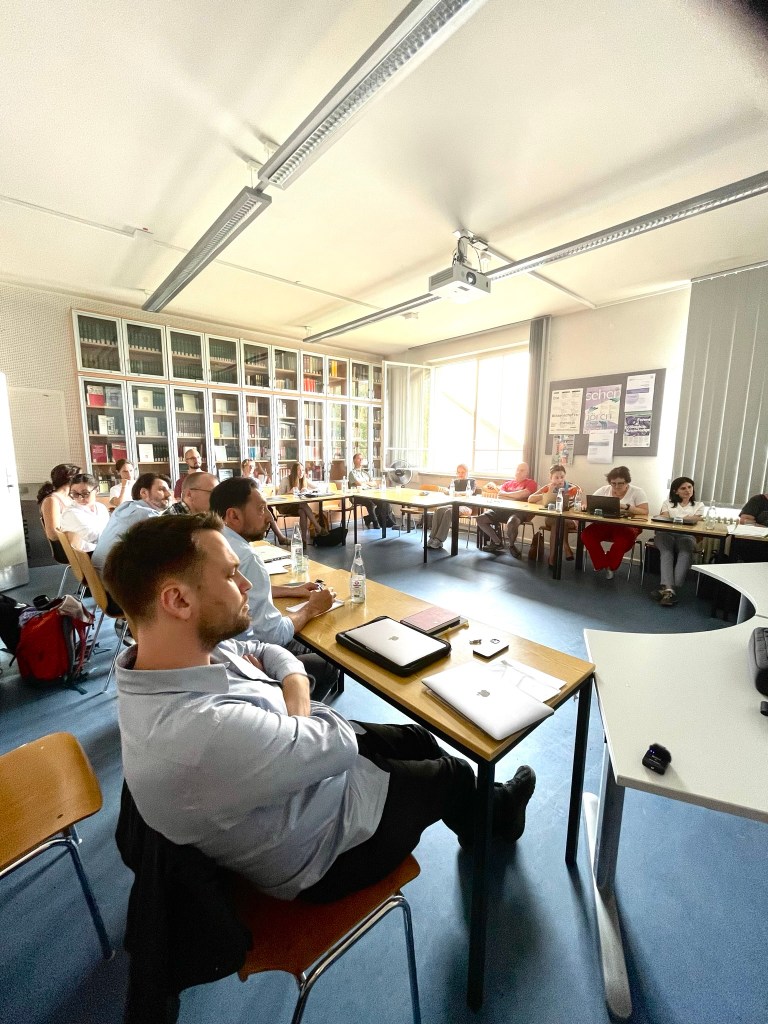
Conference Report: Russian Ecospheres 2nd Annual Meeting (14–16 July 2023, LMU Munich)
Following our initial meeting at Freie Universität Berlin in June 2022, our second annual meeting, entitled “Forms of Ecological Knowledge”, took place at Ludwig-Maximilians-Universität München on July 14 – 16. Our speakers explored ecological ideas and practices as forms, not only in the sense of artistic form, but also with respect to the history of knowledge, society and institutions.
Questions of form figure prominently in contemporary aesthetics, social theory and ecocriticism. This trend applies to such different movements such as Franco Moretti’s quantitative literary studies, the revival of Goethe’s morphology, New Formalism or the search for an extended understanding of form beyond formalistic constrictions. In contrast to past waves of form thinking such as inter-war formalism and post-war structuralism often accused of aestheticist and abstractive tendencies, these movements argue for “expanding our usual definition of form in literary studies to include patterns of sociopolitical experience” (Caroline Levine). This boom in form(alist) thinking has also touched ecocriticism and environmental studies. Already in 2007, Timothy Morton has argued to “move[ ] beyond the simple mention of ‘environmental’ content, and toward the idea of environmental form”, acknowledging the ways ecological knowledge is gained, classified and narrated.
Building on Levine’s formal theory, this conference asked how forms constrain, differ, overlap, intersect, travel and do political and epistemological work across time and space. In dialogue with case studies form various research contexts, it discussed the “affordances of form” (Levine), taking into account the materiality of form, its appropriation by actors in the field and its variation in distinct settings. It applied a broad understanding of form, bringing (more traditional) formal elements such as literary and textual genre or narrative in dialogue with an extended understanding of form as a means of social and political structuring (e.g. through colonial or gender hierarchies, the establishment of epistemological networks etc.).
Of special importance were the following research questions:
- How has nature been put into form in the history of the Russian and Soviet empire?
- Which textual modes of representation emerged over time?
- How did they change?
- How do textual forms migrate and change across disciplines, first and foremost between arts and science?
- What are disciplinary, political and social configurations behind the formation of ecological knowledge?
- How do Russian/Soviet forms of ecological knowledge relate to other contexts?
- Are there distinct modes and tendencies in appropriating knowledge from other state/empires? How do ‘forms’ travel?
- How do different forms of knowledge compete and contrast within the empire?
- How does Russian/Soviet cultural, literary and historiographical theory conceptualize form in an ecological perspective?
- Which concepts are informed by scientific ideas (evolutionary theory, morphology, paleontology)?
- How can they be operationalized as (proto-)ecocritical devices of analysis?
Day 1
First Section:
Opening the first section “Theoretical Perspectives”, Susi Frank asked in her talk “Are the Premises of Econarratology in Formalism?”. She expanded the notion of “formalism” beyond canonized Russian Formalism by introducing the Ukrainian writer Maik Yohansen. As a manual for nature writing avant la lettre she discussed his 1928 book How A Story Is Built, one of the first creative writing handbooks, as a poetological adventure going beyond the idea of a mere description of nature.
Clemens Günther approached form through the lens of conceptual history: departing from a historical semantics of presentiment (‘predchuvstvie’), he compared the use of this narrative and epistemic device in realist works by Pisemsky and Tolstoy and in scientific and literary texts on earthquake prediction. He traced the textual operations of bringing the subjective, objectless and bodily centered presentiment into a scientific category while reflecting upon the epistemic and aesthetic (il)legitimacies accompanied by this endeavor.
Second Section:
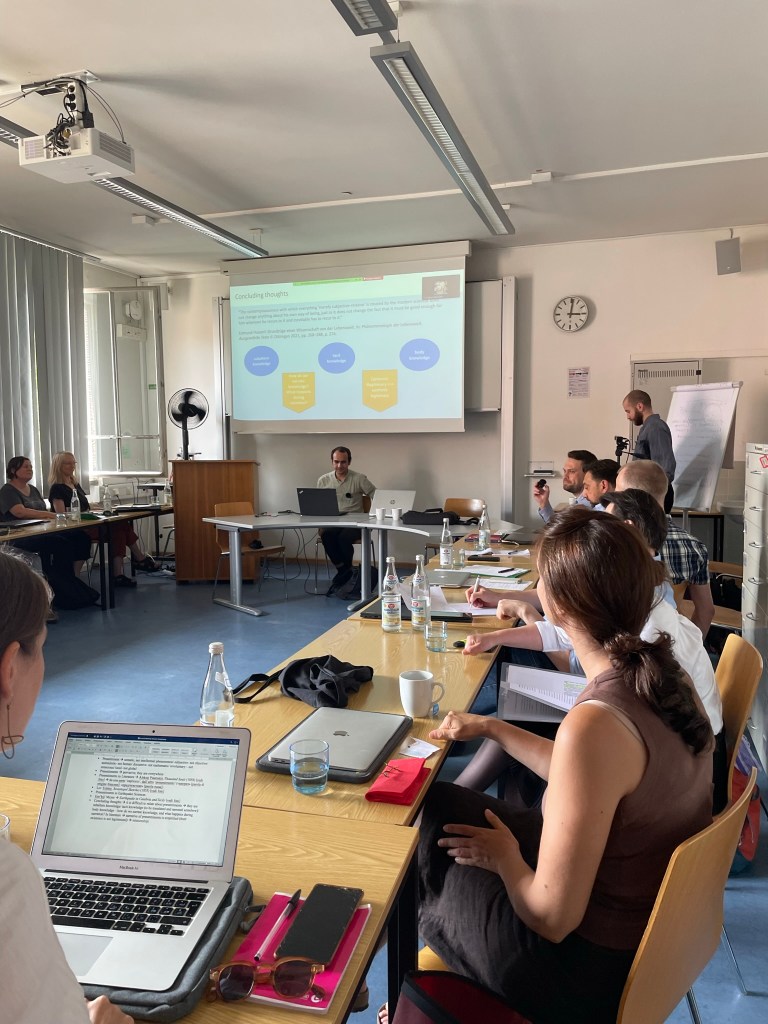
The second section “Political Ecologies” centered on the Soviet period and started with Jonathan Oldfield’s presentation on “Soviet Articulations of Natural Systems and Society-Nature Interaction”, expanding on his 2021 book The Soviet Union and Global Environmental Change. Oldfield demonstrated the growing awareness of environmental crisis and change in the late Soviet period that was heavily influenced by the reception of Vladimir Vernadsky’s theories. Andy Bruno introduced his new project “Forms of Growth in Soviet Socialism: Reconsidering Productivism in Light of Scholarship on Degrowth”. Suggesting different paradigms of growth throughout Soviet history, Bruno asked how Soviet productivism could inform contemporary debates about de-growth and alternatives for capitalism.
Bruno also gave a general insight into the netoworks interdisciplinary exchange via an interview, accessable here:
The section concluded with Tatjana Petzer’s talk on Vernadsky’s concept of autotrophy and its cultural reflections. By applying the biological and botanist concept of autotrophy to human relationships and society, Vernadsky inspired utopian vision of of growth and alimentation were discussed on a socioeconomic and cosmic level, as Petzer showed on many examples from science, literature, and architecture.
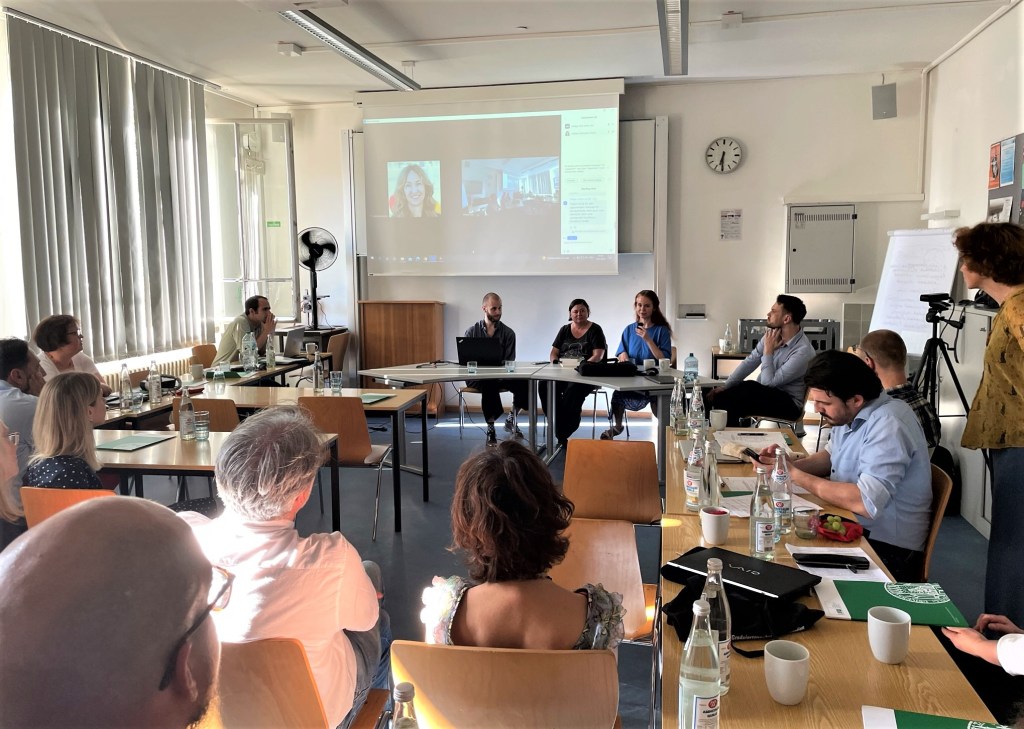
The highlight of this first conference day was a poetry reading by Anna Glazova, who read from her book For the Shrew that was awarded with the Andrey Bely prize in 2013 (an English translation has been published this year). In her introduction, our guest Oxana Timofeeva commented on Glazova’s poetical appropriations of animals with respect to the ideas of Gilles Deleuze and contemporary philosophy. In the discussion, Glazova not only shared insights into her poetic working process, but also on her work as a translator of German poetry into Russian.
Day 2
Third Section:
The second conference day started with the section “Narrative Forms of Ecological Knowledge”. Our guest Mariia Koskina, a postdoctoral researcher at the University of Fribourg, showed in her talk on Soviet development in Siberia how hydrological infrastructure projects since the 1950s shaped notions of timescapes at various societal and institutional levels. By semantically charging the Siberian rivers with history and mythology, the Soviet authorities hoped to establish relations between the people and the environment and, thus, to enhance their commitment to this infrastructural project. Mika Perkiomäki’s talk on the timely topic of representations of nuclear power plants since Russia’s full scale invasion of Ukraine examined changes of nuclear mythologies, such as the ‘peaceful atom’, under conditions of war. Timm Schönfelder, in his talk “Narrating the Hunt. Trajectories of Venatic Knowledge Towards the Fin de Siècle”, explored the ways hunting was narrated in ego-documents, guides and exhibitions in the 19th century, identifying common tropes and narratives across (Eastern) Europe but also discussing the form and reproducibility of hunting knowledge to a wider audience.
Fourth Section:
Section 4 on “Models of Evolution” started with Georgy Levit’s presentation on Nikolai Mikloucho-Maclay. Starting his career as a student of Ernst Haeckel, who coined the term “ecology”, Mikloucho-Maclay later questioned and undermined Haeckel’s racist anthropology. Doing field work in Papua New Guinea, he falsified Haeckel’s assumptions of this alleged anthropological “type” by introducing ethnographic methods of participant observation and meticulous documentation into ecology and anthropology.
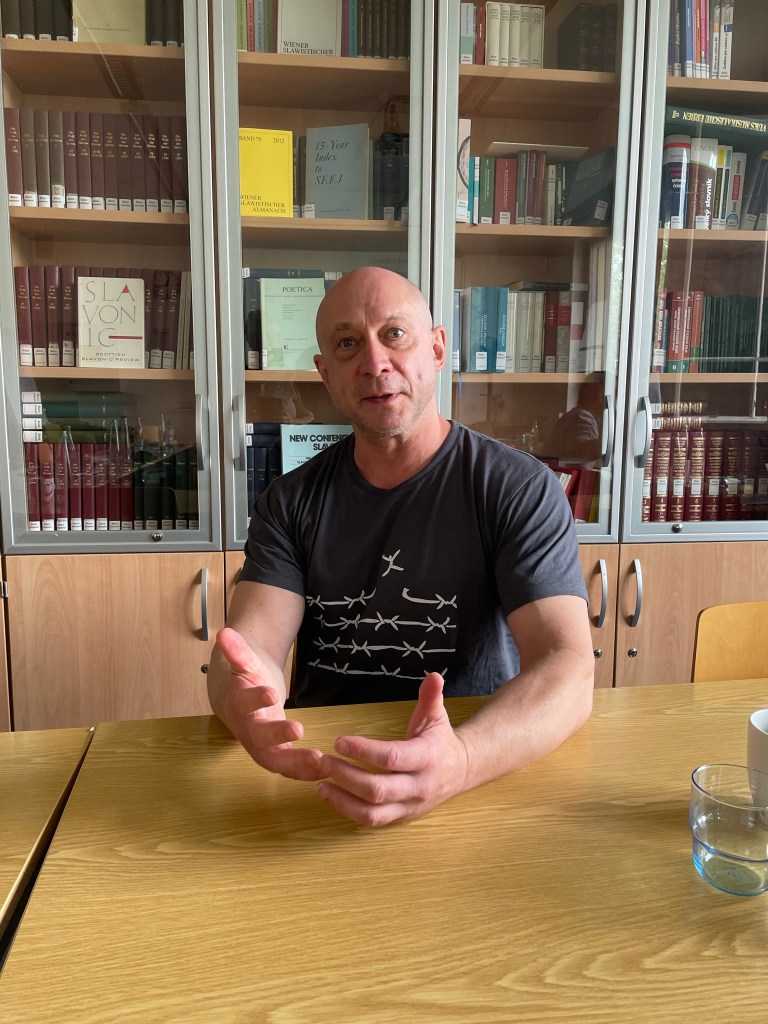
Philipp Kohl’s talk “Narrating the First Forms of Life: Aleksandr Oparin and Vadim Safonov” discussed Oparin’s theory of the origin of life, also influenced by Haeckel, not only as a primal scene of differentiation between an individual body and an environment, but also as a formal challenge to narrative in Safonov’s speculative fiction work The Master of the Planet (1933).
Fifth Section:
Section 5 on “Ecological Metaphors” opened with a paper by Mieka Erley on “Soviet Practices of Closure in Ecology and Narrative”, discussing how theorists like Serhiy Podolinsky and writers like Evgeny Zamyatin and Stanisław Lem conceptualized closed systems as theoretical and narrative strategies against entropy and the heat-death of the universe. Elena Fratto, in her talk “Food, Environment, and Recycling: The Revolution as Metabolic Activity”, analyzed natural and organicist metaphors in the thought of formalist theorist Viktor Shklovsky with a focus on the scientific concept of metabolism. She also gave insights into the networks processes and goals and the particular outcomes for the different members in an interview, which you can find here:
In the last talk, which Colleen McQuillen delivered online, a close reading of Vasilii Nemirovich-Danchenko’s collection Kama and the Urals (1890) showed that nature served as a constitutive element for the form of the ‘putevoi ocherk’ (travel sketch) and how this genre contributed to a growing awareness of ecological crisis, showing itself in deforestation and local climate change.
Day 3
On the last day of the meeting, the network members discussed ongoing and future activities:
The anthology working group has compiled an extensive list of Russophone texts on ecological themes and is now in the process of drafting a proposal for publishing houses; the handbook working group reported on the next steps towards the publication of the forthcoming Palgrave Handbook of Russian Ecological Culture; the “Cybernetic Ecology” reading group presented their readings and discussions; Tatjana Petzer gave a report on the conference “Green Cultures in Eastern Europe” she organized together with Erik Martin at Karl Franzens Universität Graz in June and the special issue of “Forum Interdisziplinäre Begriffsgeschichte” with contributions resulting from the first meeting 2022 in Berlin.

After these reports, the group discussed further projects, including the third meeting in 2024 (tentative title: “Scales of Ecology”) and a call for activities for smaller workshops.
Further activities of the network and possibilities to take part here:
-
Publication: Interdisciplinary conceptual history
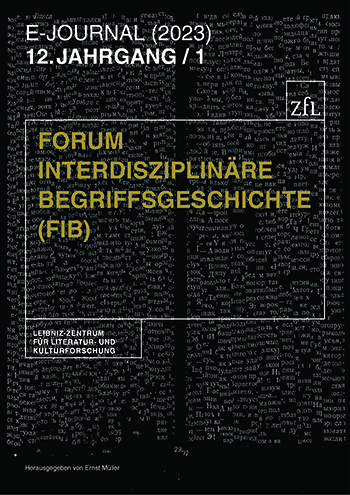
With contributions about ecology in Eastern European terminologies such as dimensions of regulations within geographical contexts and the analysis of concepts of metabolism, semiotics and biogeocoenosis,
the Leibniz Center for research on literature and culture (Leibniz Zentrum für Literatur- und Kulturforschung) published,
together with our network member Tatjana Petzer and papers from the Russian Ecospheres network.
The E-Journal is open for access via the following link:
Explore further activities within our network and stay informed about future events:
- Entropy HumanitiesSince the 2010’s, energy humanities has become a growing field in Slavic… Read more: Entropy Humanities
- 4th Annual Network Conference
 Our fourth and final annual meeting of the DFG-funded research network Russian… Read more: 4th Annual Network Conference
 - Roundtable: ASEEES Annual Convention 2024Our Roundtable at ASEEES Annual Convention 2024 in Boston On Sunday, November… Read more: Roundtable: ASEEES Annual Convention 2024
- Report: Third Network Conference
 Following our initial meeting at Freie Universität Berlin in June 2022, our second annual meeting, entitled “Forms of Ecological Knowledge”, took place at Ludwig-Maximilians-Universität München on July 14 – 16. Our speakers explored ecological ideas and practices as forms, not only in the sense of artistic form, but also with respect to the history of knowledge, society and institutions.
 - Conference: Modernism and its ‘Environments’In the two-day event, coordinated by our network member Elena Fratto, participants… Read more: Conference: Modernism and its ‘Environments’
- Call for Papers: Adapting to climate change and climate extremes in historical perspective
 Network Members in cooperation with the GWZO call for papers until the… Read more: Call for Papers: Adapting to climate change and climate extremes in historical perspective
- Entropy Humanities
-
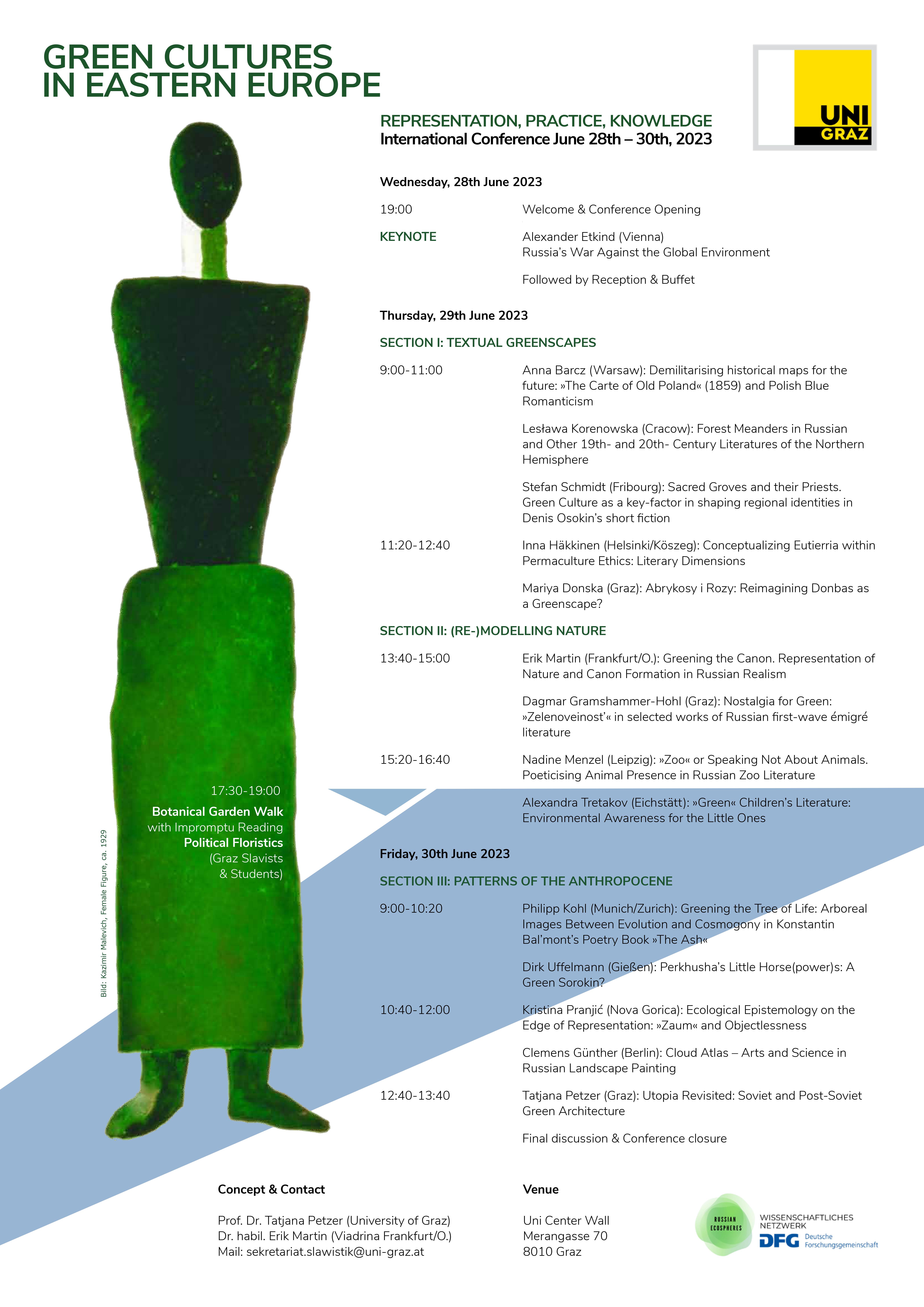
Conference: Green Cultures in Eastern Europe
Invitation to the International Conference
June 28th – 30th 2023GREEN CULTURES IN EASTERN EUROPE —REPRESENTATION, PRACTICE, KNOWLEDGE
The shift towards ecological aspects in Eastern European modernity gave rise to knowledge practices and interdisciplinary concepts such as »geobiosfera«, »ėkologicheskaia kul’tura«, »geopoėtika«, as well as corresponding cultural and artistic forms of representation of human-nature interactions. The conference takes up the comprehensive umbrella term »green culture«, which is suitable for cultural studies research on knowledge practices within an »ecological culture«: It highlights an emphatic understanding of »greenness« as a historically funded, positive value regarding the harmonic balance of culture and nature, yet it is nevertheless politically reflective and critical about man-made ecological destruction.
Ecological reflections in texts, images, and spaces put social relations towards nature on the touchstone. The presentations aim to work out and systematize the specifics and variety of Eastern European »green cultures« from the 18th century until today on several levels:
- on the level of literary and artistic procedures of nature representation as well as the canonization and hierarchization of corresponding forms and models;
- on the level of environmental semiosis, communication, and social practices;
- on the level of culture-specific forms of ecological knowledge. (full programme attached.
Programme and registration:
-
Working group: Anthology
Members of the Russian Ecospheres network currently prepare an “Anthology of Russian Ecological Thought“.
They attempt comprising translations of critical primary and secondary texts on ecology in the context of the Russian and Soviet empire. These texts are meant to become a valuable tool for familiarizing students and scholars with lines of ecological thought in Russia and making key texts available for an international public.
Interested in further activities within the network?
If you want to find out more about our activities within the network over the next two years? Here, we provide you with updates about what our working groups, members and the network as a whole are working on:
-
Workshop: Crossing Boundaries
Together with his colleague Helena Holzberger (LMU Munich), Russian Ecospheres member Timm Schönfelder is organizing a workshop titled “Crossing Boundaries. Human-Animal Relations from Post-Petrine Russia to the Soviet State (1725–1991)“.
The workshop will take place on sight in Leipzig from 29th till 30th of June 2023.

Motivation of analyzing human-animal relations
“The study of human-animal relations is one of the most promising fields in historiography. The workshop will take a longue durée-perspective on the interplay of human and nonhuman actors that ranges from post-Petrine Russia to the fall of the Soviet Union. During the past three decades, it has evolved from animal activism to a highly theorized endeavor that tries to re-situate nonhuman species in societal contexts.” – Timm Schönfelder
With regards to the theoretical and methodological tools of the thriving field of human-animal studies, it is necessary to re-evaluate established narratives of internal colonization (as in the example of the fur trade), culturalization (e.g., in pet-keeping and the emergence of livestock farming), and conflicting agency (as in the rather macabre tales of polar bears and Arctic explorers).
What is more, in light of the lasting inaccessibility of Russian archives, this widened perspective allows alternative avenues and opportunities in finding and interpreting historical sources. Thus, the workshop aims at bringing together scholars from such varying backgrounds like environmental, social and cultural history with the goal of producing a peer-reviewed special journal issue that delivers new approaches to an old relationship.
Preliminary topics for the workshop
Possible contributions may include, but are not limited to, the following topics:
- Human-animal encounters in contexts of imperial expansion
- Trans-species agency and processes of culturalization
- Commodification of animals from proto-capitalist to socialist economies
- Food cultures in transition and the industrialization of animals
- Human and nonhuman animals in gendered relations of power
Interested in contributing or taking part?
The workshop will focus on developing publications for the field, which is why the coordinators are looking forward to contributions with a spatial scope from western Russia to the Pacific Ocean, and from the steppes of Central Asia to the ice shelves of the Arctic Circle.
The call for papers ends at the 10th of March, 2023. You will be notified by early April regarding acceptance. If interested, please inform yourself here:
-
Reading Group: Cybernetic Ecology
Within the network a reading group on cybernetic ecology has been formed which will start its activities in spring 2023.

Preliminary topics:
The reading group will discuss post-war theories of cybernetic ecology (e.g. by Howard and Eugene Odum, Gregory Bateson, Ramon Margalef) and its Soviet reception, theories of cybernetic modelling of ecosystems such as forests or waters, the ecologization of life sciences, modelling of ecological crisis (Soviet Earth-Systems-Science, Climate Change, etc.) and artistic responses to cybernetic ecology.
The reading list of the group will be made available online.
Possibility of joint discussion:
Interested participants are invited to join us and can register with Russian Ecospheres’ coordinator Clemens Günther via clemens.guenther@fu-berlin.de.
The dates of the sessions will be posted online, the first session will be held on February 27th, 7pm (Berlin local time).
DFG-Netzwerk
Forms of Ecological Knowledge in Russian Literature, Culture and History

 "Russian Ecospheres"