-
Obituary of Julia Obertreis
In silent mourning and with much grief we hereby must say goodbye to our valued network member and appreciated colleague
Julia Obertreis
who passed unexpectedly last week at the age of 54.
We give our condolences to the family, friends and colleagues and want to honour Julia’s character and her contributions within her family and friends, but also within the research network, which has lost a dear member and bright mind.
Many of our network members have been in close contact and exchange with Julia and her original ideas, and together as well as with others, Julia has contributed to the sphere of contemporary history about Eastern Europe and as an inspiring professor for many of her students at the FAU in Erlangen. As an editor of the Slavic Review and member of the Scientific Advisory Board she enriched the scientific field with her publications on Russian and multi-ethnic empires, infrastructure and environmental, global and Eastern European history and many more.
We are full of sorrow about the loss of this dear friend, colleague and mind and we are wishing Julia’s family, friends and colleagues courage and peace during this time of mourning.

For those wanting to send a short letter of condolence or a honouring of Julia’s participation and appreciation, we can publish them collectively and thus announce our support through a lasting “memory wall”.
-
Network Conference 2023: Forms of Ecological Knowledge
From the 14th to 16th of July 2023, the first public conference of our network will take place under the topic “Forms of Ecological Knowledge. DFG Network “Russian Ecospheres”. It will take place at the Ludwig Maximilian Universität in Munich.
Concept
Our network members will meet in a public conference lasting several days, in which they will present their results and progress in the various working groups and workshops.
The 2023 Russian Ecospheres Network Annual Meeting invites contributions on forms of ecological knowledge in Russia. It asks for textual, discursive, social and political modes of generating, ordering and organizing ecological knowledge. Drawing on the recent resurgence of thinking about form in theory and on historical understandings of form in the natural and social sciences as well as cultural studies, it looks for distinct Russian approaches to form and aims to locate them globally. It is interested in contributions to the conceptual history of ecological form in the Russian and Soviet empire as well as in empirical studies related to the subject.
Our conference in the context of current discourses
We assume that a dialogue about form across disciplines can help to establish a more nuanced notion of “ecological form” (Hensley, Steer). To open up the space for our disparate disciplinary approaches (literary and cultural studies, environmental history, history of science) and transdisciplinary dialogue, we chose an open, multi-angled concept of form. Such an understanding grasps forms as assemblages and configurations of ordering knowledge, characterized by recurrent and shifting patterns and materialized in distinct communicative and institutional forms of organization and genre.
Regarding anticipations of ecological form in Russian and Soviet theory, an ecocritical reassessment of Russian formalism could be a promising starting point to ask how processes of ecological and cultural transformation do influence each other:
Building on Levine’s formal theory of form, this conference asks how forms constrain, differ, overlap, intersect, travel and do political and epistemological work across time and space. In dialogue with case studies form various research contexts (linguistics, genre theory, realism, materialist aesthetics, semiotics of culture, cultural history, kulturologija, philosophy, ethics, theology, anthropology and ethnography, conceptual history, history of science, Umweltgeschichte [environmental history]), we ask for the “affordances of form” (Levine), taking into account the materiality of form, its appropriation by actors in the field and its variation in distinct settings.
Preliminary Programme
From our members:
Traveling Concepts Between Science and Literary Theory
- Philipp Kohl: The Substrata of Form: Paleontological Thought in Soviet Literary Theory in the 1930s
- Elena Fratto: Food, Environment, and Recycling: The Revolution as Metabolic Activity
Ecological Narratives
- Mika Perkiömäki: Forms of ecological narratives in media representations of the Chernobyl and Zaporizhzhia nuclear power plants during Russia’s war on Ukraine
- Timm Schönfelder: Narrating the Hunt. Trajectories of Venatic Knowledge towards the Fin de Siècle
- Mieka Erley: Against Entropy: Soviet Practices of Closure in Ecology and Narrative
Forms of Political Ecology
- Andy Bruno: Forms of Growth in Soviet Socialism: Reconsidering Productivism in Light of Scholarship on Degrowth
- Tatjana Petzer: Autotrophy. An Alimentary Form of Social and Literary Ecology
Reconsidering Vernacular Knowledge
- Clemens Günther: The Form of Feeling: Presentiments in Science and Literature
- Colleen McQuillen: The putevoi ocherk as a tool of epistemological colonization in late 19th C.
- Georgy Levit: On the facets of ecological method: Ernst Haeckel and Nikolai Mikloucho-Maclay
If you would like to subscribe to the Russian Ecospheres mailing list for updates, feel free to register here:
-
Call for Papers: Conference on Hydro-poetics
The Department of Slavic and Hungarian Studies at the Humboldt University in Berlin invited paper proposals for a conference on “Hydro-poetics: an Ecocritical Perspective on Eastern European Arts (1960s-1990s)”.
The conference, coordinated by Russian Ecospheres member Susanne Frank, will be held in Berlin from the 5th till 7th of October 2023.

Water as a cultural phenomenon
Water is our most precious resource but also an element of culture historically charged with diverse meanings and values. The Bible, the Qur’an, and other ancient scriptures, just like modern scientific theories, regard water as the source of all life, as that element which preceded the creation of the earth. Water is a life principle, but also a force of destruction through drought and flood, a potential instrument of erasure and obliteration of landscapes and places of culture. Whether through natural phenomena or by the hand of humanity, sunken vessels, and ancient as well as modern cities are archived and preserved at the bottom of lakes and on the ocean floor. Water is crucial in processes of cleaning, and yet it is becoming a global storage of waste and pollution.
In text and image, water circulates as a quintessential metaphor of change, linked with gestation, birth, and death. Its mirroring capacity, as in the ancient myth of Narcissus, invites figurations of duplicity, visionary sights, and hypnotic effects. Water fluidity conjoins with issues of time and transience (Heraclitus); with memory, translating into motifs of forgetting and forgiving. Water structures the Earth’s surface (oceans), connects and divides (watershed) and delimits (continents). It is used to draw boundaries (left bank vs. right bank).
In human history, water has played a central role as an inter-connecting medium as well as an ill-used material substance: a conduit of travel and war, an instigator of settlements and resettlements, and an energy resource depleted by political, industrial, and economic pursuits.
Motivation for the congress
Our urge to study water as a cultural phenomenon is driven by the current ecological crisis related to the quality and availability of water. Through the symbolic realms of philosophy, literature, film, and visual arts, which reveal the polyvalence of meanings attributed to water, we strive to understand its cultural history. Every culture’s tradition engenders their own symbolic and archetypal meanings in images of water, stemming from place-specific hopes and anxieties, from language, and from shared cultural preconceptions.
The geo-cultural focus of the conference responds to the growing interest in ecocritical interpretations of Eastern European arts in research and scholarship as well as in artistic practices. While ecocritical perspectives on arts originated in Western literary theory of the early 1970s, in the region of Eastern Europe ecocriticism as a method of interpreting and understanding culture was scarce until late 1990s (in contrast to environmental history). Nonetheless, the artistic practice of the late-socialist era holds an immense corpus of works by artists who deal with issues of nature, water (and ecology) as their essential theme.
Reconsidering Eastern European arts from an ecocritical perspective means returning agency to these diverse practices of environmental art and activism. The conference intends to further the discussion around environmental engagement of Eastern European arts in critical terms derived from the specific histories of environmentalism across the socialist states of Eastern Europe, rather than those defined by the Western-centric understanding of environmental art histories. At the same time, through invigorating the aqueous aspect of cultural theory, it is our aim to enhance recognition of water’s critical presence in all spheres of our lives and encourage sustainable eco-political practice.
Preliminary contents of the conference
Possible topics for individual presentations, that were sent in paper to the coordinators till the 31st of January, and that will be reviewed and selected until the 31st of March include
- artworks addressing transformations in the environment and exhibiting growing awareness of the ecological crisis,
- water and power: politics and energy,
- organized nature/ taming of water: reflections on invasion of the natural habitat by built environments (e.g. state-controlled hydro-engineering plans such as power plants, canal, and dam building; but also aqueducts, drainage and irrigation systems, artificial ponds, etc.) and the changing relationship between humans and nature,
- ideologization of hydrological landscape/hydrosphere in Cold War context,
- aquatic imagery, language, and symbols; figurations of ephemerality, fluidity, purification, and shapeshifting,
- hydrotext in late- and post-socialist century prose fiction,
- visual arts, cinema, animation,
- video installations, artificial immersive environments, land art, site-specific environmental installations,
- materiality of water: sounds, textures, surfaces,
- socio-cultural identities and narratives of rivers, seas, and other water bodies,
- environmental conceptualism,
- meteorological metaphors,
- environmental approaches between science and art/art as science.
Furter questions or interested in taking part?
Contact hydropoetics.slawistik@hu-berlin.de
and subscribe to be updated about incoming news about the conference via
-
Annual ASEEES Convention
From the 10th to 13th of November, the second part of the annual “ASEEES” Convention takes part in Chicago.
Here, the international forum for Slavic, East European & Eurasian Studies makes a broad exchange of infromation and ideas possible. By that, further work and intelectual vitality in these fields is engaged and sustained.
“The 2022 ASEEES convention invites discussion of the experiences associated with precarity in Eastern Europe and Eurasia as well as in the academic institutions that employ us to study the region.
Primarily associated with unstable, exclusive, and increasingly uncertain working conditions together with the collective cultural and individual psychological experiences that result, precarity, has become a factor on nearly every aspect of life on our planet.
While the effects of precarity are highly diverse, they have a profound impact, beyond the realms of work, on our environment, health care, mobility, social hierarchies of inclusion and exclusion, and the politics and economy of cultural production, among others.
Changes in the global economy have made precarity especially visible in the present, but these are phenomena with long histories and long-evolving cultures. The peoples of Eastern Europe and Eurasia have created and responded to those threats in important, diverse, and instructive ways, in both the past and the present.”
– ASEEES CommiteeFields of Discourse and Interdisciplinarity
- Anthropology/Cultural Studies
- Early Slavic, East European and Eurasian studies until 1800
- Economic History
- Geography/Urban studies
- History: Central and Southeast Europe
- History: Russian and Eurasian
- Literature: Central and Southeast Europe
- Literature: Russian and Eurasian
Discussion Rounds relating to Russian Ecospheres
Over the days of the convention, several panels and workshops are held, where recent publications are discussed. Relating to the topics of our network, members of our networks and other scientists of the serval fields regarding topics around ecology present their papers and take part in the panels and discussion rounds.
You can find a detailed programme with topics of interest and your personalised search by people, topics and organisation via ASEES interactive program:
Relating to our topics within the network, basic theoretical frameworks such as the Noosphere-approach and its 100 years of history are discussed, taken into context and adapted to different fields. Russian Ecospheres’ member Andy Bruno‘s Paper about Environmental Imaginaries is discussed under the topic of Post Soviet Environmental Futures with questions about how to live in zones of catastrophe and areas of environmental transformations and how current environmental governance of the state react shape the topics about nationalist history, sovereignity and developement.
Panels take place about Ecociriticism, with discussing the heritage of Anton Chekhov and its naturalist tradition. Keywords such as biodiversity, deforetation and pollution are discussed and redefined. Mieka Erley, another member of our network, coordinates a panel about Ecocriticism and Russian Literature, considering negative consequences of environmental degradation and the disturbance of human-nature relations. To do so, she takes into account papers of Russian Ecosphere Members such as Philipp Kohls paper about Ecocritique of the Tarto-Moscow Semiotic-School and Coleen McQuillens paper about the Deforestation and Degeneration in the Urals.
The ecological lense is widened, for example by shedding light on the historical context of activism in post soviet cinema, its correlation to culture and heritage, and on key elements in commemoration and education of era defining contexts such as the Chernobyl catastrophe, its depiction and its aftermaths.
Take part in the discussions and register for the plural forms of interdisciplinary exchange via the ASEEES webiste:
-
Workshop: Noosphere – Ecosphere – Semiosphere

Together with Julia Lajus, professor at LMU Leipzig, our network member Julia Herzberg organized the workshop
“Noosphere – Ecosphere – Semiosphere: Explorations into Environmental Thoughts”
It took place in cooperation with the Rachel Carson Center in Munich,
on October 6th 2022.
Topic:
The workshop addresses the current interest in conceptualizing the ongoing geological period of the history of Earth, making the discussions relevant to the current debate on environmental governance and governance in general.
The Anthropocene demands a deeper look into the predecessors of such thinking, and the Russian-Ukrainian and Soviet geochemist Vladimir Vernadskii, who named humankind “a geological force,” is undoubtedly among them.
Vernadskii’s legacy was adapted to a broader context of ecological thought in Russia and beyond, focusing on his ideas on Noosphere as a new state of biosphere, “a sphere of reason.” Its concept was compared to related research and the causes of the weak state of planetary thinking in contemporary Russia were discussed.
As part of this, Russian Ecospheres’ member and coordinator Philipp Kohl gave a talk on Lotman’s semiosphere.
Funded by:
Coordinated by:



-
Entropy Humanities
Since the 2010’s, energy humanities has become a growing field in Slavic Studies and beyond, seeking to explore the intricate connections between energy, culture, and society. However, in this exploration, energy’s thermodynamic counterpart has been neglected – the idea of entropy as an irreversible process resulting in the complete dissipation of energy and the end of all useful work.
In response to this, the workshop suggests starting a conversation on entropy humanities with an interdisciplinary workshop between literary and cultural studies, art history, the history of science, science and technology studies, philosophy and adjacent disciplines. While focusing on Russia and Eurasia, the workshop also invites researchers on other regions.
The aim of the workshop is to reintroduce entropy into today’s environmental, ecocritical and new-materialist conversation: as a principle that is pervading the world, its energy flows, its biological and cultural systems. Just as energy humanities have been familiarizing literary and cultural studies with the forces of nature, entropy humanities should address culture’s sensibility for and negotiation with the fatigue of natural forces.Weitere Informationen: https://jordanrussiacenter.org/events/entropy-humanities
-
4th Annual Network Conference
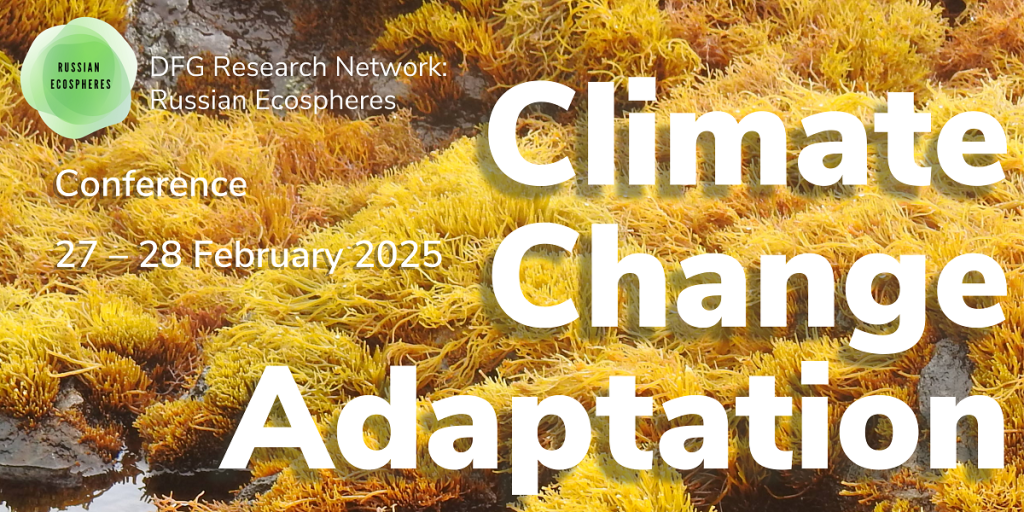
Our fourth and final annual meeting of the DFG-funded research network Russian Ecospheres will take place in the context of “Climate Change Adaptation” from the 27th of February till 1st of March 2025 at GWZO in Leipzig.
Together with scholars from various disciplines, including historiography, geography, literary and cultural studies, anthropology and the natural sciences, historical lessons will be learnt from policies of adaptation from the 18th to 21st century.
Program and Accession
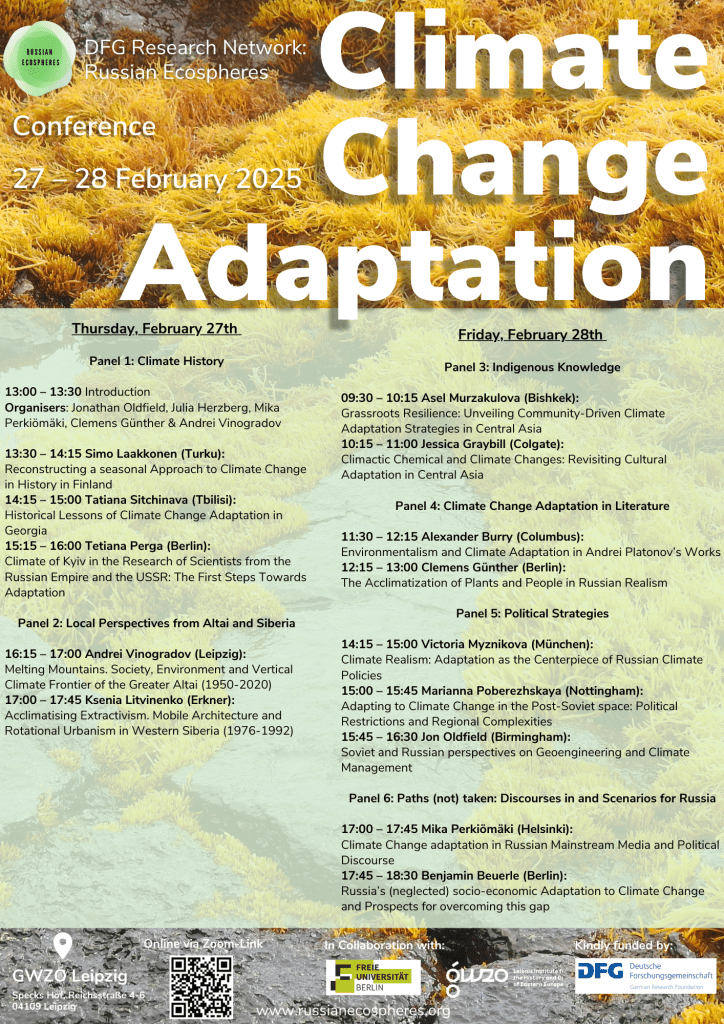
The conference program on February 27th and 28th is open to the public. Scholars and guests are asked to present small- and large-scale case studies on adaptation, its discursive implications and technological practicability in Eastern Europe and the former territories of the Russian Empire and the Soviet Union.
Preliminary Content
As meeting the 1.5-degree benchmark for limiting the effects of climate change becomes increasingly implausible, the technological and social discussion is moving towards adaptation. Adaptation features prominently in the most recent synthesis report of the IPCC (Intergovernmental Panel on Climate Change), and formed a key theme at the 2023 UN Climate Change Conference (COP 28). There are, however, also gaps and barriers in adaptation policies, mostly caused by insufficient funding and inadequate technology in addition to the complex character of the climate change process. Philipp Staab (2022) argues that this gradual shift from mitigation to adaptation illustrates a greater shift from (self-)development to (self-)preservation in society, opposing the modernist agenda of democratization, emancipation and individualization. This recent reappraisal of adaptation as policy and concept prompts the question: how and what can contemporary discussion learn from historical experience? As sociologists like Talcott Parsons have argued, adaptation is a structural means of human behavior and social order. This also holds true for the adaptation to changing environmental conditions, both in short- and long-term perspective.
The regions and countries of the former Soviet and Russian empires promise to be particularly rewarding case studies in this respect, considering the area’s marked climatic zonal shifts and the prevalence of extreme weather and climate events. Furthermore, the area encompasses a range of competing adaptation approaches and traditions including, for example, the large-scale technocratic focus of Soviet and Russian managerialism, the more nuanced, local level adaptations at the national, regional and local levels, and the enduring, lived adaptations of indigenous peoples. Its history also embodies the ambiguity and dialectics of adaptation, namely the human adaptation to environmental conditions and the adaptation of environmental conditions to human needs.
Funded by:
Coordinated by:
-
Roundtable: ASEEES Annual Convention 2024
Our Roundtable at ASEEES Annual Convention 2024 in Boston
On Sunday, November 24th 2024, the Russian Ecospheres network held a roundtable at the ASEEES Annual Convention in Boston, titled “Russian Ecospheres Research Network Roundtable: Concepts of Scale in Imperial Russia and the Soviet Union”, in continuation of our third annual meeting at GWZO Leipzig in July 2024.
Summary
Popularized in human geography, problems of ‘scale’ and practices of ‘scaling’ have been widely discussed in such various fields as biology, ecology, architecture, engineering, and mathematics. More recently, they have gained new relevance in debates on the Anthropocene. Through the lens of scale, the roundtable asks new questions about the relationship between humans and their environments across different scales of space and time, pursuing a large historical scope from the 18th to the 20th century.
The roundtable included the following papers:
- Colleen McQuillen: Problems of Perception: Lomonosov and Learning How to See ‘priznaki’ of Precious Metal Ores
- Erik Martin: Spisat’ s prirody/Writing from Nature. The Sketch as a Full-Scale Technique of Description (The očerk in the 1830s–1850s).
- Philipp Kohl: The First Big History in Russia? Petr Lavrov’s Pre-Human History of Thought
- Mieka Erley: Soviet Energy-Entropy Debates: Disciplines as Scalar Solutions
- Andy Bruno: Balancing the Scales: Ecology and Economy in Soviet Socialism
Further activities within the network:
Funded by:
Coordinated by:
-
Report: Third Network Conference
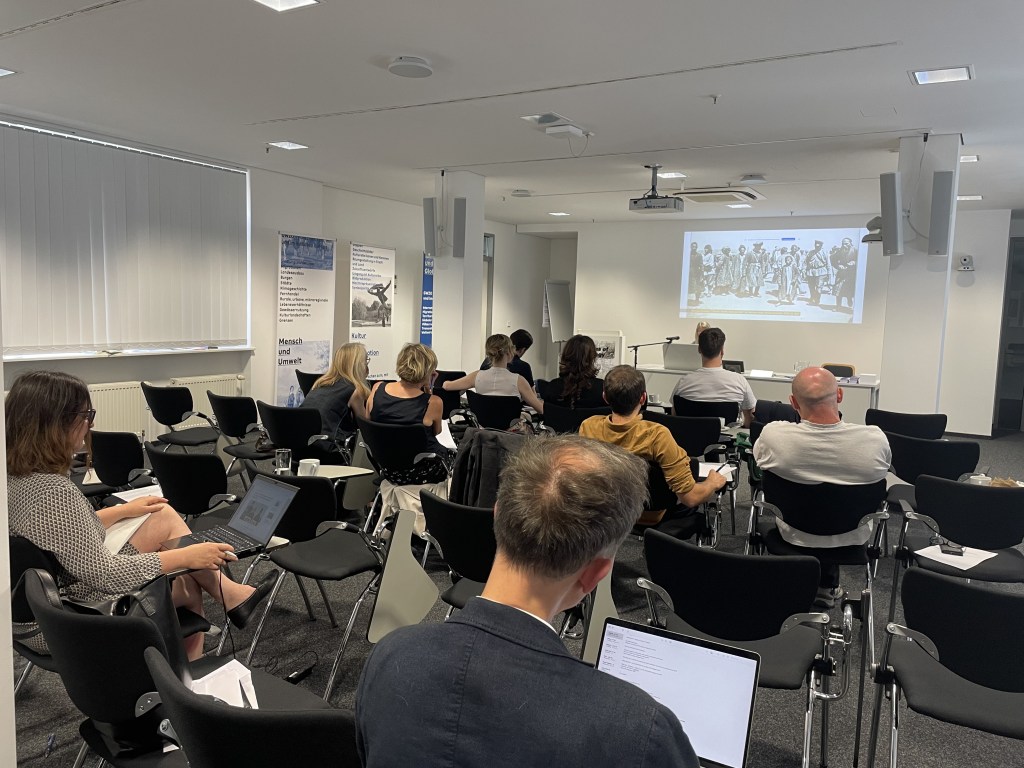
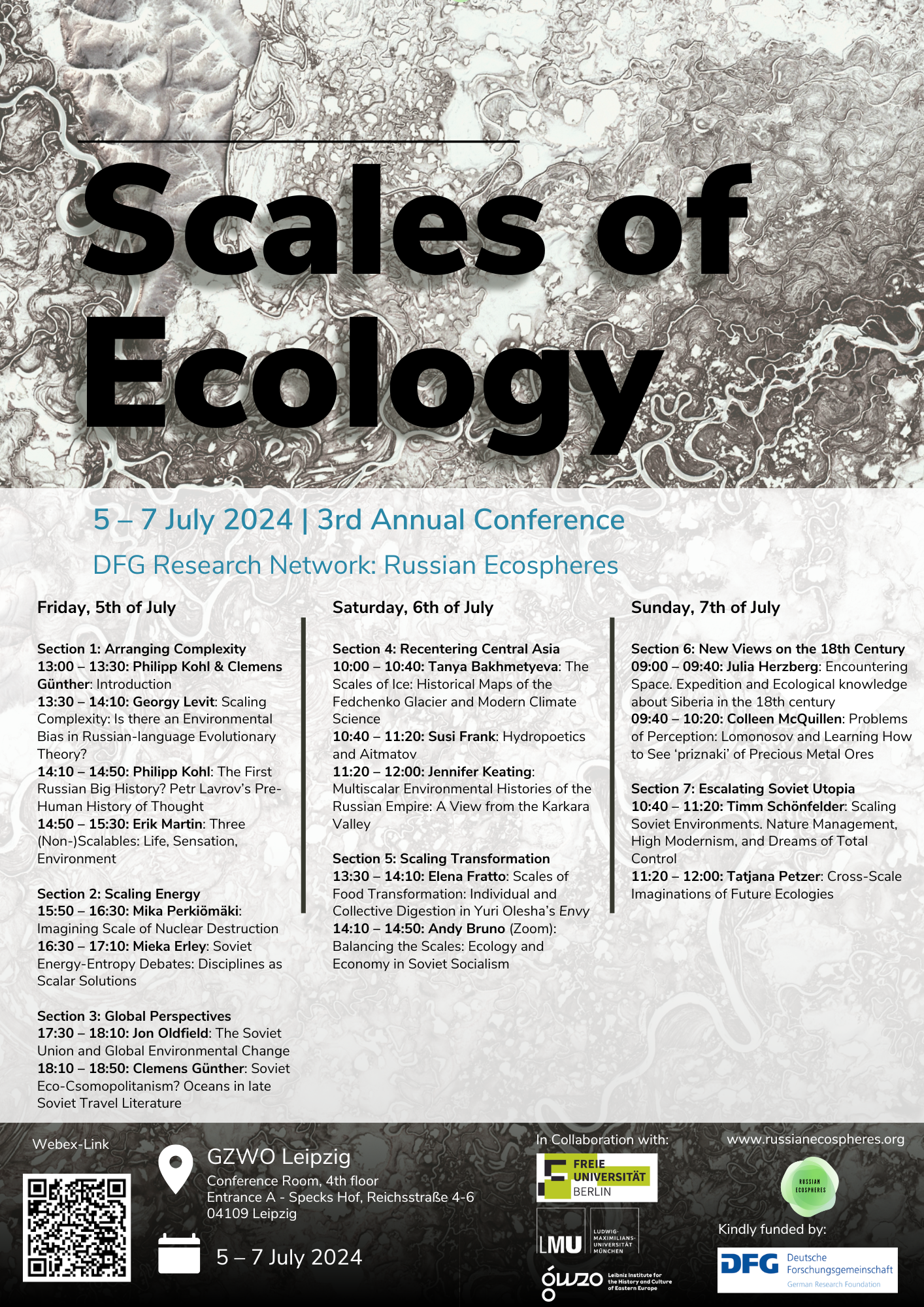
3rd Annual Meeting: Scales of Ecology (5th – 7th of July 2024, GZWO Leipzig)

Our third and last annual meeting entitled “Scales of Ecology” took place at GWZO Leipzig (Leibniz Institute for the History and Culture of Eastern Europe). Together with two guests, Tanya Bakhmetyeva (Rochester) and Jennifer Keating (Dublin), our network members discussed scales and scaling as an emerging field in ecocriticism and environmental history in Russia and Central Asia.
During the three days, the network explored the following question and moved beyond:
Are scales in Russia and the Soviet Union, a space of “large-scale projects and large-scale bureaucracies”, only ever vast or small?
Day 1
In the introduction of the three day annual conference, Philipp Kohl and Clemens Günther outlined how scale functions as a prominent transdisciplinary concept in contemporary geography, ecology, physics and world literature. Scale aligns to a newly emerging epistemological frame, informed by constructivism, relativism and praxeology and offers a conceptual tool to relocate familiar ideas in new temporal and spatial dimensions.
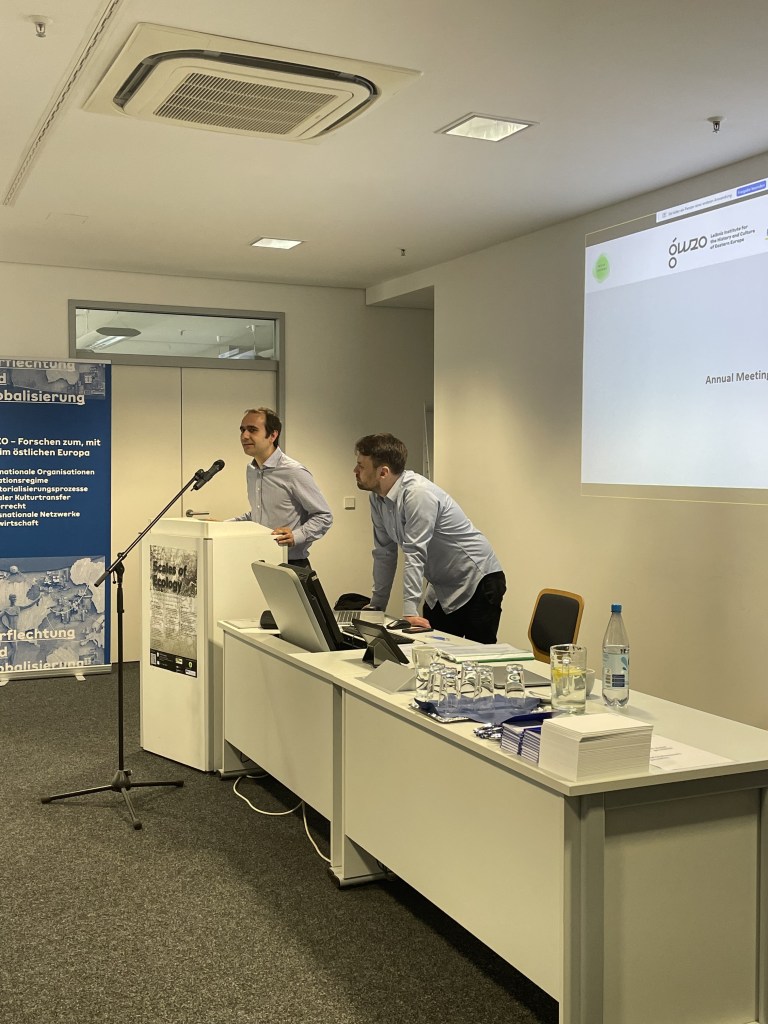
Climate change in particular leads to the “derangement of scales” (Timothy Clark) and promotes concepts that go beyond anthropocentric scales such as big history or deep time. Changes in scale affect modes, concepts and contents of representation. They are mediated through narratives and require new ways of reading and analyzing cultural artefacts.
First Section: Arranging Complexity
After the introduction, Erik Martin opened the conference with a talk titled “Three (Non-)Scalables: Life, Sensation, Environment”. This contribution challenged our meeting’s theoretical premise with a philosophical approach to life, something he calls a “non-scalable”. Departing from Aristotle’ classic definition of life, stating that a clear distinction between the animate and the inanimate cannot be drawn, the presentation turned to two prominent philosophical figures of Soviet science: Vladimir Vernadsky and Aleksandr Oparin, both reflecting on the relationship between living and non-living matter.
While Vernadsky returns to what Martin calls a “new scientific geocentrism” where life not merely adapts to the environment but transforms it, Oparin reflects upon the beginning of life as a process in which a boundary between a living entity and a non-living environment forms. Both scientists, Martin concluded, could be seen as “spherical thinkers”, drawing a connection to our first network meeting dedicated to the idea of spheres.
Second Section: Scaling Energy
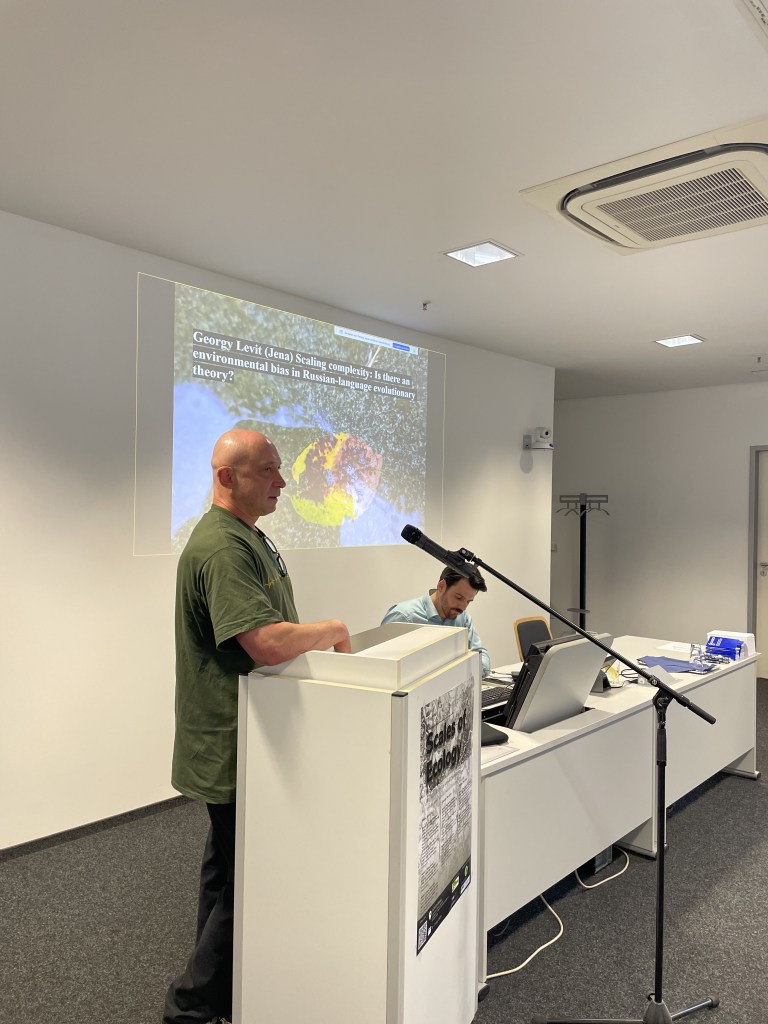
The second section started with Georgy Levit’s presentation “Is there an Environmental Bias in Russian-language Evolutionary Theory?”. By the “bias” in the title, Levit meant a tendency to see life in its complexity and its environmental interrelatedness. Drawing on Darwinian and non-Darwinian authors from Russia and the Soviet Union (Lev Berg, Nikolay Timofeev-Ressovsky, Ivan Shmal’gauzen), Levit described how ideas of evolution were scaled up, arriving at an idea of biological evolution on all major levels, from the molecule to the biosphere.
A special role in the intellectual history of these ideas played the Kazakh Zapovednik of Borovoe, where both Vernadsky and Shmal’gauzen were evacuated during WWII. Writing his two major works here, Shmal’gauzen develops his biocybernetics theory of transformation of information in biogeocenosis. The Russian-language bias of environmental thought in theories of evolution, Levit concluded, instead of a “selfish gene” favored a “selfish biosphere”.
The next paper was given by Philipp Kohl: “The First Russian Big History? Petr Lavrov’s Pre-Human History of Thought”. His case study was dedicated to a philosophical project, populist intellectual pursued between about 1870 and his death in 1900: the “history of thought”, an account of the evolution of thought starting with cosmological, geological, and biological processes. Lavrov never finished the cumbersome project, producing volume after volume. Looking at the critical and satirical reception of his 1874 Essay on the History of Thought, Kohl pointed to a discussion on scale and proportion he then compared to the contemporary discourse of “Big History”, a field of study established by David Christian and often uncritically embraced in contemporary Russia. A concluding comparison of Christian’s and Lavrov’s works’ structures as well as similar attempts of pre-human universal histories illustrated the promises and limits of large-scale narratives of history.
Third Section: Global Perspectives
The third section started with Clemens Günther’s paper “Soviet Eco-Cosmopolitanism? Oceans in late Soviet Travel Literature”. Based on numerous Russian travelogues on the world oceans in the long 1970s, he traced the emergence of oceanic narratives in late Soviet culture, which acknowledged the growing endangerment of the maritime world through fish die-off, fishery, nuclear radiation, overtourism and more. Unlike the inbound late Stalinist culture, those travelogues rehabilitated globalist frames and gradually established a cosmopolitan frame. They conceded the complicity of the modernizing Soviet empire in causing those risks and called for transnational cooperation to overcome and mitigate ecological degradation. In terms of actors and objectives, this agenda was cosmopolitan and comparable to prominent maritime icons such as Jacques-Yves Cousteau. Soviet writers, however, only reluctantly addressed the normative questions behind this environmental agenda and did not develop a new, specific Soviet idea of cosmopolitanism beyond imitating Western models and international organizations.
Day 2
The section “Global perspectives” continued on Saturday morning with Jonathan Oldfield’s contribution, “The Soviet Union and Global Environmental Change”. Oldfield shortly summarized the results of his eponymous recent book and paid particular attention to questions of gathering and analyzing ecological data.
He argued for a nuanced view on the Soviet ecology, acknowledging both environmental destruction (accentuated in early post-Soviet scholarship on socialist ecocide) and the growing awareness of ecological risks in science and society embodied by key figures such as Victor Kovda who followed the tradition of Vernadsky and his integrated view on the biosphere. The Soviet Union was a leading power in generating data on climate change and in ecological monitoring. Although tools for working with the gathered data were underdeveloped, they represent a valuable resource for contemporary, big-data-inspired ecological science.
Fourth Section: Recentering Central Asia
The fourth section, dedicated to the recentering of Central Asia, opened with our guest Tanya Bakhmetyeva, Associate Professor of Gender, Sexuality, and Women’s Studies at the University of Rochester. Her paper titled “The Scales of Ice: Historical Maps of the Fedchenko Glacier and Modern Climate Science” was part of her ongoing work on a collective monograph undertaking an eco-biography of the largest glacier in Tajikistan.

She started with the most recent event in this biography, its 2023 renaming after the full-scale invasion of Ukraine into Vanch-Yakh Glacier. Since it is the largest glacier outside the polar region, its sheer size makes it a problem of scale. In her talk, Bakhmetyeva focused on the mapping history, looking at several major expeditions since the 1920s conducted in collaboration of German and Soviet scientists. She thus conceptualized scaling as a tool of modernization and power. With an ecofeminist focus on the interrelationship of bodies and the environment, she pointed to the multifaceted corporeal practices that researchers were using to literally scale the natural object with their (male) bodies.
In the next talk, “Hydropoetics and Aitmatov”, Susi Frank offered an ecocritical reading of Chingiz Aitmatov’s novella The White Steamship (1970), a project she had been developing in the context of her conference on “Hydropoetics” (organized in 2023 together with Jana Rogoff in collaboration with our network). Set at Issyk-Kul, a salt lake without outflow in eastern Kyrgyzstan, the text uses bodies of water – the lake and the rivers flowing into it – as instances of a locus amoenus, as spaces of passage and the return to nature. In her talk, Frank not only gave a detailed analysis of the text but also contextualized it with Aitmatov’s position in the literary field and the political landscape of the late Soviet Union, his role in the formation of a Kyrgyz national literature, and, most importantly, his ecological commitment during perestroika, particularly his invitation of international environmental organizations to lake Issyk-Kul in 1986.
The section was concluded by our guest Jennifer Keating, Associate Professor at the School of History at University College Dublin. Her talk “Multiscalar Environmental Histories of the Russian Empire: A View from the Karkara Valley” was based on her research project on pastoralist exchange networks between southern Central Asia, the Russian Empire and other countries.
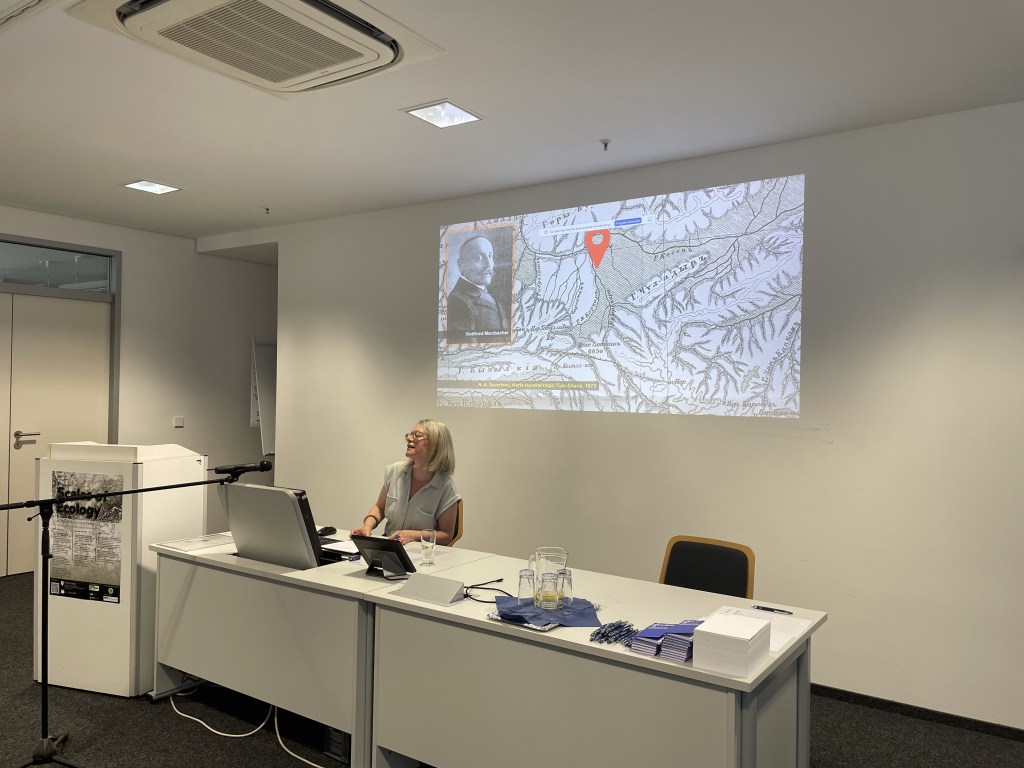
In her case study on the fair at Karkara Valley, about a hundred kilometers east of the above-mentioned lake Issyk-Kul, she presented a chapter in the global history of pastoralist economy around 1900 that has been shaped by its imperial actors so far. With what she called a multiscalar view, Keating suggested going beyond the familiar scales of the regional and the global, offering a new account of the multiethnic phenomenon of the fair drawing on both local and international scientific sources. Thus, she argued, scalar frictions between the ecology of pastoralism and ecology of imperial capitalism could be seen more clearly.
Fifth Section: Scaling Transformation
The last panel on Saturday, “Scaling Transformation”, started with Elena Fratto’s paper “Scales of Food Transformation: Individual and Collective Digestion in Yuri Olesha’s Envy”, in which she offered a new reading of the author’s 1927 classic. Her talk began with a historical overview of the early Soviet reorganization of the food system, including theories concerned with dietary trends and their impact on human bodies and the environment.After that, Fratto gave a detailed analysis of the rich culinary and corporeal imagery of Olesha’s novel.
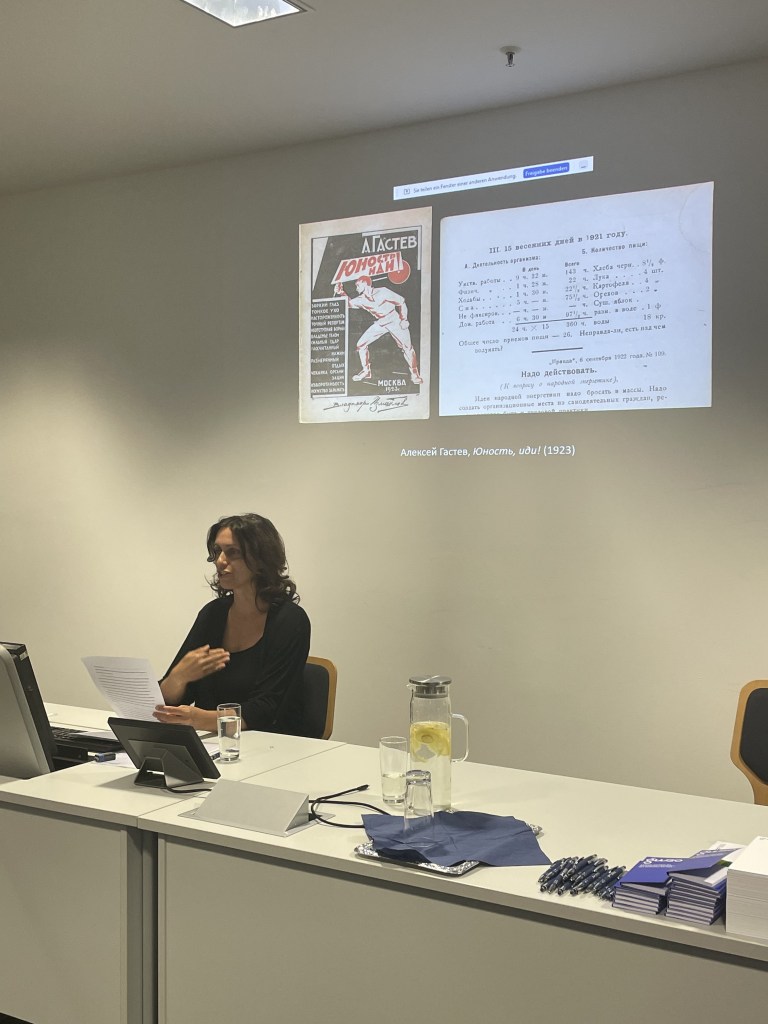
The narrative, often read as a satirical account of Soviet industrialization ambitions, includes the prototype of a perfect sausage, both nutritious and sustainable. It not only serves as a metaphor of collectivity, but also as one of transformation, literally expressed in the semantics of ‘pererabotka’. Drawing on Bakhtin’s theory of carnival, depicting eating as the dissolution of boundaries between the body and the world, Fratto showed the interrelationship between environmental figures of thought and metabolic models in the early Soviet period.
Andy Bruno, who could not come to Leipzig, gave an online presentation titled “Balancing the Scales: Ecology and Economy in Soviet Socialism”. He started with a hypothesis: in environmental thought of the early Soviet period, there is a remarkable shift from conquest to balance. To underscore this, Bruno looked at holistic theoretical impulses to achieve a balance between economy and ecology. This balance, he argued, was rather dynamic and anthropocentric than ecocentric. Bruno demonstrated this tendency, looking at several texts by Nikolay Bukharin, one of the most influential proponents of post-revolutionary Historical Materialism.
Comparing several early-1920s theoretical works, Bruno pointed out a shift from a Promethean view of nature to an idea of balance (ravnovesie). In the Theory of Historical Materialism (1925), a chapter titled “The Balance Between Society and Nature” uses deforestation at the Volga as an example of an event with the potential to influence global changes in climate and thus establishes an ecological link between a regional event and its planetary scale. This tendency towards balance, Bruno concluded, can be shown after 1945 in more manifest forms.
Excursion to Bergbau-Technik-Park

On Saturday afternoon, our group headed to Bergbau-Technik-Park, an outdoor exhibition located at the former open-cast mine Espenhain south of Leipzig. Our guide Martin Baumert (German Historical Museum, Berlin, author of a 2023 monograph about post-mining areas in East Germany) not only demonstrated the lignite mining practices common in East Germany, but also gave a historical account of the environmental and social impact of GDR coal mining and the recreational use of former pits.

Day 3
Section 6: New Views on 18th Century
The last day of our annual conference started with a look at “New Views on the 18th Century”, a section with two presentations from environmental history and literary history. Julia Herzberg dedicated her talk to the search for the Cold Pole. Like previous talks, which approached the issue of Scale as one of measuring phenomena with different scales, Herzberg looked at the interplay between the exploration of space and the problem of establishing a reliable method of temperature measurement, which only became possible during the 19th century. In her talk, she not only showed how local indigenous knowledge can be used to provide information on global weather developments, but also pointed out how the imaginary of the cold pole became part of explorers’ autobiographical narratives, where it is troped a “coffin of ice” or a “living grave”. Although in 20th century, it became clear that there could be no single cold pole, interest in the idea remained high.
In her following talk “Problems of Perception: Lomonosov and Learning How to See ‘priznaki’ of Precious Metal Ores”, Colleen McQuillen offered a reading of Mikhail Lomonosov’s mineralogical writings based on his studies at Freiberg in 1739 – not too far from our conference venue in Leipzig. His First Principles of Metallurgy or of Ore Mining published in 1763 go far beyond a technical description of minerals. They offer detailed accounts on how to recognize ores, negotiating sensual perception between the visual and the olfactory. In her analysis, McQuillen shed light on Lomonosov’s narrative strategies to produce knowledge about the invisible – the ores hidden in the Earth. At a time where neither microscopes nor chemical methods of analysis are available, miners look for ‘priznaki’ (material qualities in color, touch and smell). In their practices, not only theological narratives of hope and reward were common, but also bodily metaphors of ‘mother Earth’ hiding treasures in her womb (the ‘bowels of the Earth’). The problem of scale becomes palpable between the relationality of embodied experience and the imperial dimension of resource extraction.
Section 7: Escalating Soviet Utopia
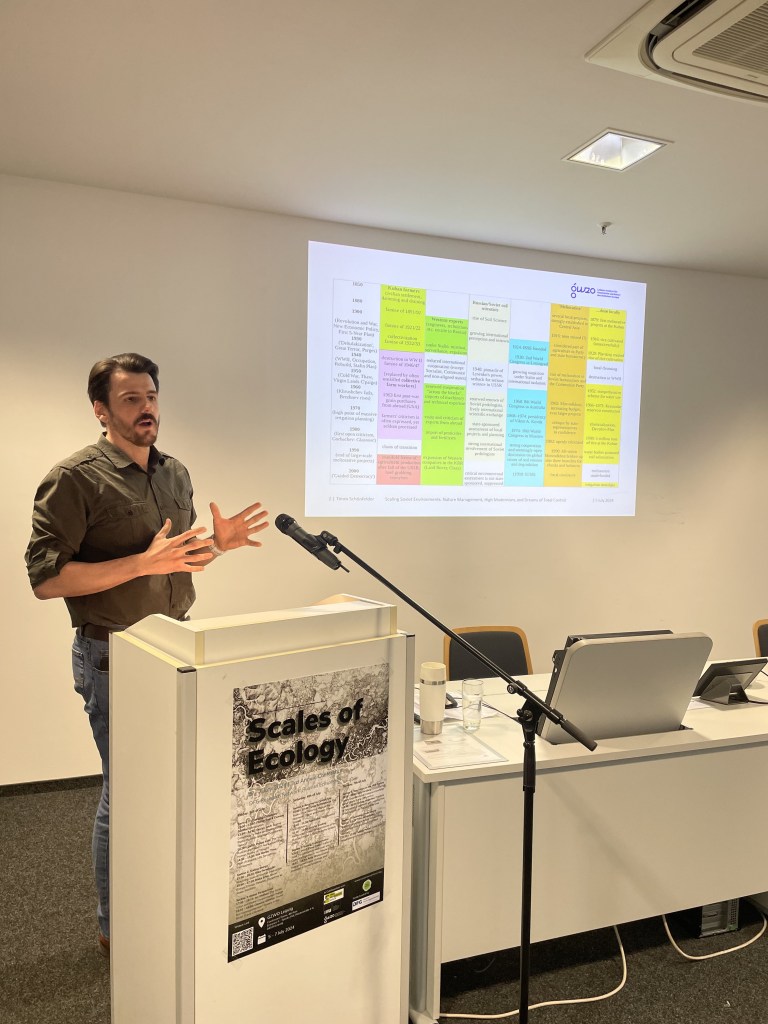
The last section of the annual conference began with Timm Schönfelder’s presentation “Scaling Soviet Environments. Nature Management, High Modernism, and Dreams of Total Control”. He built on his monograph on agriculture and melioration in the Kuban Region in southern Russia and summarized the stages and policies behind expanding agriculture. Although the history of artificial irrigation dates back to the 19th century, those ideas gained new ground in Stalinism and were formative for the late Stalinist “Great Plan for the Transformation on Nature”.
Although the history of artificial irrigation dates back to the 19th century, those ideas gained new ground in Stalinism and were formative for the late Stalinist “Great Plan for the Transformation on Nature”. The high hopes – protection against floods, yield increase and saving water supply –, however, never fully materialized and led to erosion, overfertilization and other environmental damages. Schönfelder introduced the various players responsible for the rise and fall of the region’s agronomic complex, including Soviet scientists, party politicians, local actors and international experts. His case study, thus, in exemplary fashion, addressed the various scales in which environmental policies can be studied and how their interplay shapes environmental conditions on the spot, both in long- and short-term perspective.
In her concluding talk “Cross-Scale Imaginations of Future Ecologies”, Tatjana Petzer turned our attention to the present. Looking at utopian designs for green cities, she asked whether these ideas were in favor of nature taking over or humans being in control. This structural ambivalence of ecological landscape design, Petzer argued, can be found in various media.
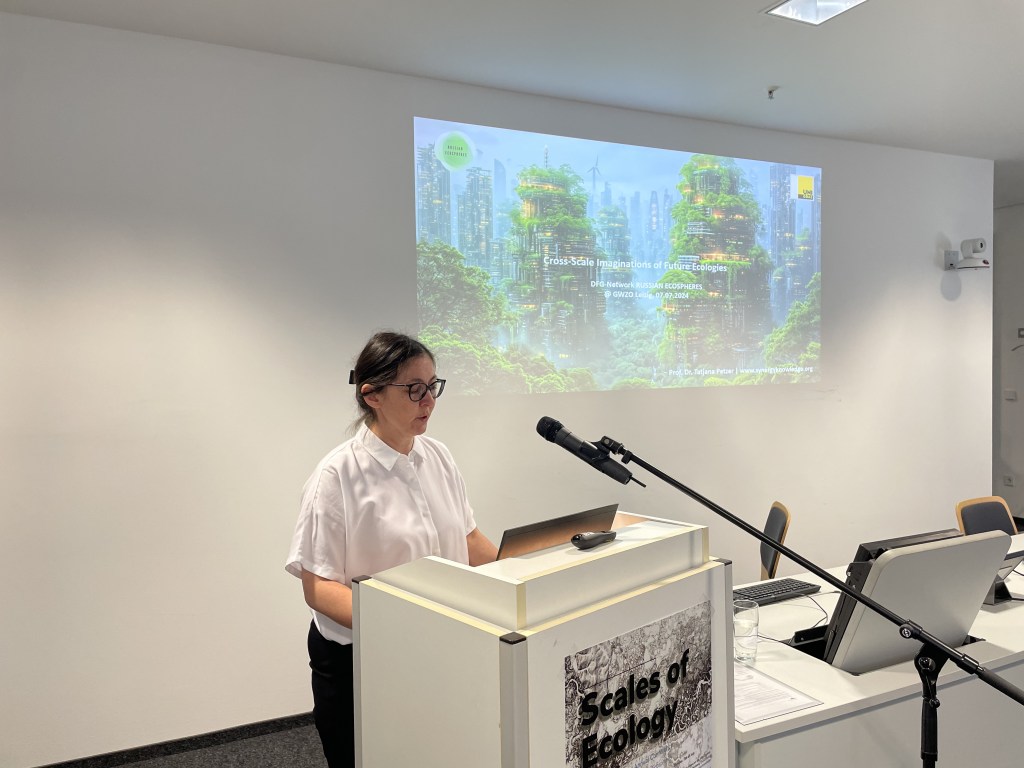
A few of them are Nikita Argunov’s 2019 film Coma, whose protagonist becomes the architect of a virtual future reality while being in a coma; Pleistocene Park, an experimental ecological project recreating a past ecosystem in northeastern Siberia; or the project “Green Reconstruction of Ukraine”, an attempt to ecologically transform municipalities damaged during Russia’s full-scale invasion since 2022. In this latter case, she pointed to conflicting visions of a green future, a debate she contextualized with the contradictory views on Ukraine between architects and urban planners from the West and local actors on the one hand and between utopian concepts of avantgarde architecture and dystopian contemporary visions on the other.
The annual conference ended with remarks and outlooks to planned cooperations between the members in upcoming workshops and conferences as well as the publications and handbooks, that will be introduced in autumn this year.
Further activities of the network and possibilities to take part here:
Funded by:
Coordinated by:
-
Conference: Modernism and its ‘Environments’
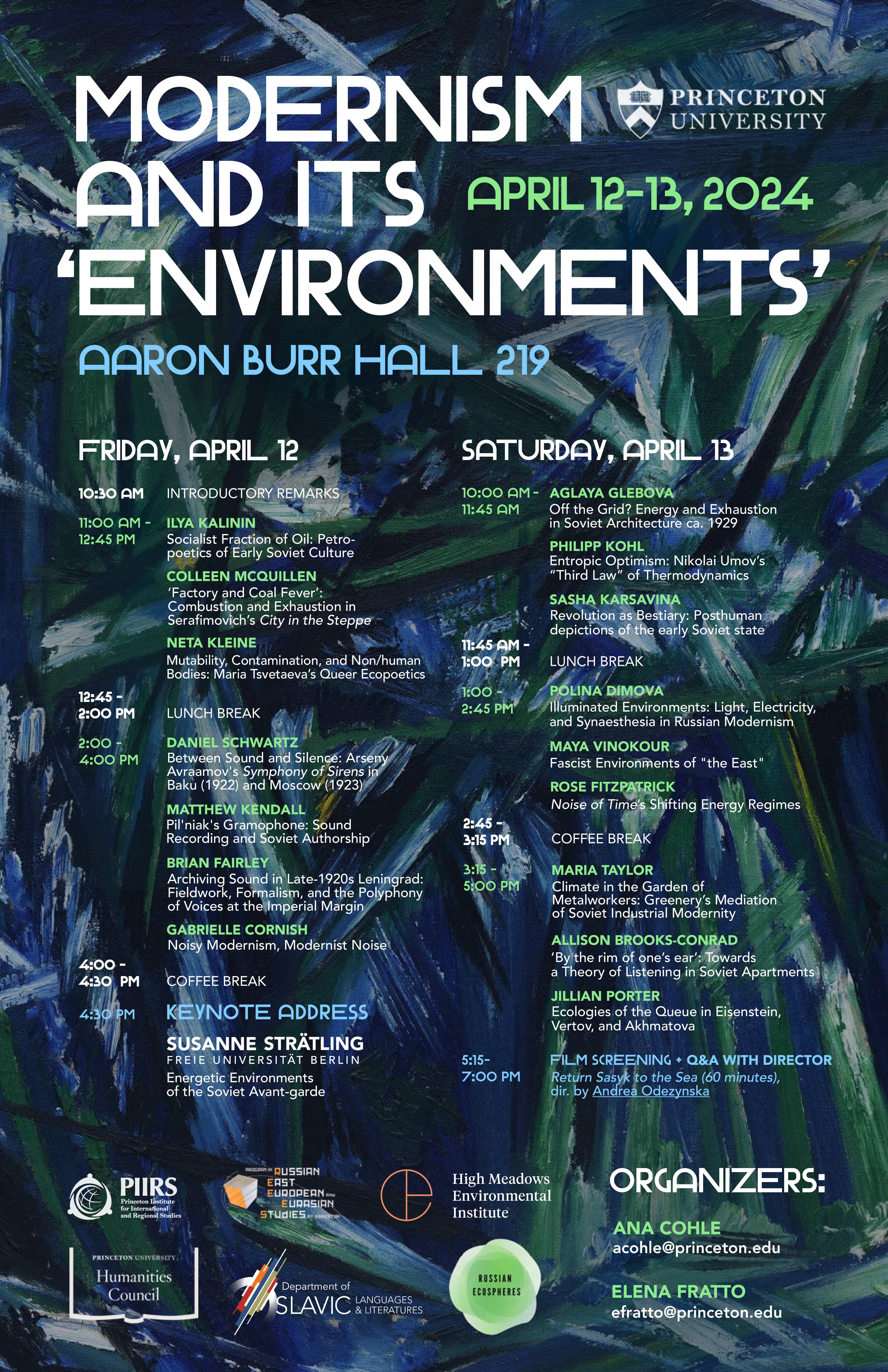
In the two-day event, coordinated by our network member Elena Fratto, participants of the conference “Modernism and its ‘Environments‘” will revisit literary texts and cultural products of Russophone modernism and the avant-garde from an ecocritical perspective.
The event will take place on sight on the 12th and 13th of April, at Princeton University Campus in the Aaron Burr Hall 219.
Conference Idea
This two-day conference will revisit literary texts and cultural products of Russophone modernism and the avant-garde from an ecocritical perspective. The numerous discoveries in the fields of climatology, paleontology, physics, and biology that punctuated the early twentieth century brought about a new understanding of time, space, evolution, and the role of human life and activity vis-à-vis other living and nonliving entities. These new scientific ideas and technologies permeated modernist aesthetics, emerging thematically and stylistically throughout literature and the visual arts. Approaches include, but are not limited to, the energy humanities, extractive practices, and sound studies.
Hosts:
- Elena Fratto
(DFG Network Russian Ecospheres / Princeton University, Department of Slavic Languages and Literatures, New Jersey) - Ana Cohle
(Princeton University, Department of Slavic Languages and Literatures, New Jersey)
Further activities within the network:
Funded by:
Coordinated by:
- Elena Fratto
-
Call for Papers: Adapting to climate change and climate extremes in historical perspective
Network Members in cooperation with the GWZO call for papers until the 30 June 2024 for the upcoming event with the Title “Adapting to climate change and climate extremes in historical perspective“, taking place in Leipzig at sight from the 27th of February untill the 1st of March 2025.
Preliminary Content:
As meeting the 1.5-degree benchmark for limiting the effects of climate change becomes increasingly implausible, the technological and social discussion is moving towards adaptation. Adaptation features prominently in the most recent synthesis report of the IPCC (Intergovernmental Panel on Climate Change), and formed a key theme at the 2023 UN Climate Change Conference (COP 28).
There are, however, also gaps and barriers in adaptation policies, mostly caused by insufficient funding and inadequate technology in addition to the complex character of the climate change process. Philipp Staab (2022) argues that this gradual shift from mitigation to adaptation illustrates a greater shift from (self-)development to (self-)preservation in society, opposing the modernist agenda of democratization, emancipation and individualization. This recent reappraisal of adaptation as policy and concept prompts the question: How and what can contemporary discussion learn from historical experience? As sociologists like Talcott Parsons have argued, adaptation is a structural means of human behavior and social order. This also holds true for the adaptation to changing environmental conditions, both in short- and long-term perspective.
The regions and countries of the former Soviet and Russian empires promise to be particularly rewarding case studies in this respect, considering the area’s marked climatic zonal shifts and the prevalence of extreme weather and climate events. Furthermore, the area encompasses a range of competing adaptation approaches and traditions including, for example, the large-scale technocratic focus of Soviet and Russian managerialism, the more nuanced, local level adaptations at the national, regional and local levels, and the enduring, lived adaptations of indigenous peoples. Its history also embodies the ambiguity and dialectics of adaptation, namely the human adaptation to environmental conditions and the adaptation of environmental conditions to human needs.
This conference calls for the historical lessons we can learn from these policies of adaptation from the 18th to 21st century. It invites scholars from various disciplines, including historiography, geography, literary and cultural studies, anthropology and the natural sciences, to present small- and large-scale case studies on adaptation, its discursive implications and technological practicability in Eastern Europe and the former territories of the Russian Empire and the Soviet Union.
Contributions:
Contributions may address, among others, the following issues:
- the cultural imaginary of climate change adaptation; tropes and narratives of adaptation; generic conventions (science-fiction, utopia/dystopia etc.),
- the cultural imaginary of climate change adaptation; tropes and narratives of adaptation; generic conventions (science-fiction, utopia/dystopia etc.),
- the cultural imaginary of climate change adaptation; tropes and narratives of adaptation; generic conventions (science-fiction, utopia/dystopia etc.),
- (socialist) policies of climate change adaptation (climate engineering, nature protection etc.),
- technological, political, moral and social constraints of adaptation,
- strategies of activating adaptive capacities,
- adaptation strategies in specific sectors (agriculture, urban planning), ecoregions or environments,
- national and transnational approaches to climate challenge and adaptation,
- local and indigenous strategies of adapting to changing climates; protection against and preparedness for extreme climate conditions; tools of adaptation,
- personal, collective, institutional and infrastructural resources that allow individuals, groups or systems to respond and adapt to climate change,
- limits and risks of adaptation; historical fallacies and their reasons.
Hand in of CfP:
Please submit your abstract (up to 300 words), a short CV (1-2 sides of A4) and your contact details to Julia Herzberg (julia.herzberg@leibniz-gwzo.de) and/or Clemens Günther (clemens.guenther@fu-berlin.de) by 30th of June 2024.
We might be able to cover costs for travel and accommodation if needed.
General Meeting Details:
Venue:
Leibniz Institute for the History and Culture of Eastern Europe (GWZO)
Reichsstraße 4 – 6
D-04109 Leipzig
Organizers:
Julia Herzberg, Mika Perkiömäki, Jonathan Oldfield, Clemens Günther, Andrei Vinogradov
Date:
27.02.2025 – 01.03.2025
Literature:
Block, Rachel; Ebinger, Jane; Fay, Marianne (eds.). 2010. Adapting to Climate Change in Eastern Europe and Central Asia. Washington.
Chavez-Rodriguez, Libertad; Klepp, Silja (eds.). 2018. A critical approach to climate change adaptation: discourses, policies and practices. Boca Raton.
IPCC, 2023: Sections. In: Climate Change 2023: Synthesis Report. Contribution of Working Groups I, II and III to the Sixth Assessment Report of the Intergovernmental Panel on Climate Change [Core Writing Team, H. Lee and J. Romero (eds.)]. IPCC, Geneva, Switzerland, pp. 35–115, doi: 10.59327/IPCC/AR6-9789291691647
McQuillen, Colleen. 2018. Human adaptation in late-Soviet environmental science fiction. In McQuillen, Colleen. & Vaingurt, Julia, eds. The human reimagined: Posthumanism in Russia, 99–113. Boston.
Staab, Philipp. 2022. Anpassung. Leitmotiv der nächsten Gesellschaft. Berlin.
Tennberg, Monica. 2012. Governing the Uncertain: Adaptation and Climate in Russia and Finland. Heidelberg/London/New York.
Funded by:
Coordinated by:
-
3rd Annual Conference: Scales of Ecology

After two inspiring meetings on spheres and forms, our third convention at GWZO Leipzig from the 5th till 7th of July 2024, will be dedicated to the problem of scale.
Like music and maps, studies of relations between culture and nature need scales which are socially produced and imply normative models (Ram 2016). Popularized first and foremost in human geography, problems of ‘scale’ and practices of ‘scaling’ have been widely discussed in such various fields as biology, ecology, architecture, engineering, and mathematics. More recently, they have gained new relevance in Anthropocene studies. Timothy Clark called the Anthropocene a symptom of a “crisis of scale” (Clark 2012, 150), a crisis that demands new conceptualizations and representations of the environment. In response, literary and cultural studies developed scale-centered approaches that allow to account for the entanglement of social, political, ecological, biological, and geological processes at multiple spatial and temporal levels (e.g., Dürbeck/Hüpkes 2022).
In ecocriticism, questions of scale have been discussed with respect to the broadening of canons, the use of digital tools, and the ability of existing narrative forms to engage with large scales of space and time, influenced by Gayatri Spivak’s and Wai-Chee Dimock’s musings on “planetarity” as distinguished from “globalization” (Heise 2019). In historiography, the differentiation of scales informs theoretical debates about time (évènement – moyenne durée – longue durée) and space (microhistory vs. macrohistory). It has been debated in various contexts, not only in environmental history (Walkind 2014), but also in the field of ‘Big History’. Thus, David Christian has suggested to examine history from the microhistorical scale of individual lives to the macrohistorical scale of cosmic history (Christian 2005). In literary and cultural studies, questions of scale figure prominently in current debates on world literature (Tanoukhi 2008) and inform works experimenting with non-anthropocentric forms of mediating voice and agency of entities such as animals or plants.
For the network meeting, we would like to go beyond questions of size:
Are scales in Russia and the Soviet Union, a space of “large-scale projects and large-scale bureaucracies” (Josephson 2013), only ever vast or small?
An approach to scale as an epistemological device of interdisciplinary humanities should allow to include competing scale concepts which mutually supplement each other. Instead of just looking at the size of scales in time and space, we plead for an ecological multidimensionality of scale. In his classic article The Problem of Pattern and Scale in Ecology (Levin 1992), ecologist Simon A. Levin identifies the problem of relating phenomena across scales as the central problem in biology and science in general. His suggestion of “cross-scale studies” has been taken up in multiple contexts (Chave 2013). We would like to make this and other approaches productive for literary and historiographical studies.
Possible topics may include but are not limited to:
- The Russian Empire and the Soviet Union in global perspective,
- Circulation, transformation, and adaptation of ecological knowledge across states and regions,
- Russian ecocriticism and world literature,
- Planetarity and ecology; mediating sense of place and sense of planet,
- Theories of scale,
- Ecological, geological, evolutionary theories of scale,
- Historical predecessors of scale ideas (e.g. scala naturae, micro- and macrocosm),
- Approaches and alternatives to concepts of scale in literary and cultural theory,
- Narrating scales,
- Narrating non-human scales of time and space,
- Scales as devices of ideology, e.g. in infrastructure and geopolitics,
- Examining scales,
- Cross-scale phenomena between the disciplines,
- Dysfunctional scales: Blurry and fuzzy states between nature and culture; Problems of (dis)proportion across disciplines and epistemologies,
- and Scales out of joint: Balance and escalation.
In addition to contributions from within our network, we invite promising PhD students or graduates to present their work at a panel for junior researchers.
For questions please contact network coordinators Clemens Günther or Philipp Kohl and visit our website to stay up-to-date.
-
Workshop: Post-Soviet Ecologies – Art & Theory
In a joint online-event of the Russian Ecospheres Network and the Posthuman Studies Lab, participants of the workshop “Post-Soviet Ecologies – Art & Theory” discuss contemporary ecological issues as problems of art and theory. The online workshop took place on December 12th at 6pm (CET).
Workshop Idea
The event consists of three parts: an introduction and presentation, a shared reading of theoretical texts, and a final presentation of contemporary artistic projects related to (Post-)Soviet ecologies.
The workshop is dedicated to ecological and economic projects of the USSR that were directly affected by the so-called Great Plan of the Transformation of Nature, which unfolded between the 1920s and the 1960s. With expeditions to traumatized spaces and locations, with artistic and theoretical work, the Posthuman Studies Lab investigates the history and the formation of Soviet ecology in conjunction with totalitarian discourses of the past and present. We will discuss the main ideological and theoretical underpinnings of such processes as “transformation,” “experimentation,” and “queerification” of nature, initiated in the early USSR and rethought in the recent projects of artists from Russia.
With: Ekaterina Nikitina & Nikita Sazonov
(Posthuman Studies Lab, Munich)Host: Philipp Kohl
(DFG Network Russian Ecospheres, Munich/Zurich)
Timetable
- 18:00: Introduction (Philipp Kohl) & Presentation Ferations.world Project (Ekaterina Nikitina & Nikita Sazonov)
- 18:30: Reading session (texts by Posthuman Studies Lab, Aleksandr Bogdanov, Trofim Lysenko)
- 19:30: Presentation of contemporary artistic projects (Ekaterina Nikitina & Nikita Sazonov)
- 20:30: End
Watch the full workshop and discussion here:
Funded by:
Coordinated by:
-
55th annual ASEEES convention
The Association for Slavic, Eastern European and Eurasian studies invites to this years 55th annual convention!

Held in this fall, the ASEEES hosts a two-piece event virtually from the 19th to 20th October and on sight, in Philadelphia Marriott Downtown, from the 30th of November till 3rd December 2023. The ASEEES is the largest and most important association for the field of Slavic and Eastern European Studies and therefore vital for the exchange and further research of Russian Ecosphere’s network.
Registration possible until the start of the convention in October:
Preliminary Program’s Highlights
Whilst celebrating the 75th anniversary of the association, the international forum makes possible a broad exchange of information and ideas, stimulating further work and sustaining the intellectual vitality of the field.
In 2023, the association focuses on the important topic of decolonisation, reevaluating long-established hirarchies as well as ways of relinquishing and taking back power. In the context of Russia’s invasion of Ukraine there is a call for the reassessment and transformation of Russo-centric relationships of power and hierarchy both in the region and in how we study it. Therefore, the 2023 ASEEES convention invites scholars to explore the theme of decolonisation across time, place, field, and institutional setting.
So far, the two-piece program consists of a variety of contributions and panels on the topics on ecology, nature and environment, found in detail vor the virtual sessions and for the on sight convention in Philadelphia:
Interesting for those researching and working within the fields such as our network are contributions and broad discussions virtually on “Production and Consumption in post-socialist Eastern Europe“, “Neo-Gothic Geographies“, “Nationalism, Animals and Sin in Tolstoy and Dostoevsky“, “Stalin-Era Collectivization, Manufactore and Wartime Collaboration” and many more.
On sight in Philadephia, interesting for network members and other interested guests will be the panels and contributions about
- “From Waste Colonialism to Renewable Energy: Exploring Environmental Activism, Injustice and Knowledge Production in Russia and Estonia”,
- “Creating the Arctic as a Carceral and Scientific Space” ,
- “Human Subjectivity/Ecological Embodiments in Russian Literature”,
- “War and Environmental Knowledge: Knowing Forests, Air and Water during the Caucasian War, the Cold War and the Yugoslav Wars”,
- “Decolonizing Nature: Vulnerability, Tenderness and Biospherical Egalitarianism”,
- “Rivers, Forests and Cities: Balancing Environmental Protection, Local and National Identities and Urban Development in Soviet and Independent Georgia”,
- “Sovereignity, Knowledge Production and Natural Resources among the Buryats and Sakha of Siberia”,
- and many more.
Contributions from our members
- Collen McQuillen is holding the chair and discussion on the panel “Human Subjectivity/Ecological Embodiments in Russian Literature“,
- Erik Martin contributes to the panel about “Teror, Horro and Misery: The “Dark Poetics” of Realism” with his publication “The Fall of the House Golovlev: Degeneration an Gothic in Saltykov-Shchedrin“,
- Mieka Erley contributes to the Panel “Matters of Prehistory II: Paleontological Fictions and Fantasies” with her Paper on “Soviet Paleoanthropology in Vladimir Obruchev’s Lost“,
- Network coordinator Philipp Kohl contributes to the panel “Matters of Prehistory II: Paleontological Fictions and Fantasies I” with his paper on “Prehistorical Materialism: Political Paleofiction in the 1860s“
- and Elena Fratto is holding and leading the discussion in the panel “MEDSEES: Environmental and Public Health: Margins and Centers II” and contributes additionally to the panel “Illness and Discability in the Slavic Imagination” by leading the discussions.
Honoring research: The ASEEES Award Ceremony
Honoring distinguished contributions to Slavic, East European, and Eurasian Studies. each year the association choses scholars, who have made major contributions to the field through scholarship of the highest quality, mentoring, leadership, and/or service.
Under the winners and honorable mentions for the Reginald Zelnik Book Prize in History is Russian Ecosphere members Andy Bruno with his publication “Tunguska: A Siberian Mystery and Its Environmental Legacy (Cambridge University Press)”.
Read Further about the Prize and Contribution:
Funded by:
Coordinated by:
DFG-Netzwerk
Forms of Ecological Knowledge in Russian Literature, Culture and History


 "Russian Ecospheres"
